




To get rid of weed smell effectively, you’ll need to act fast, cannabis terpenes bind to porous materials within 12-24 hours. Start by creating cross-ventilation with fans positioned to exhaust contaminated air outward. Deploy enzyme-based sprays on fabrics and activated charcoal to absorb volatile compounds. Don’t overlook PM2.5 particulates that settle on surfaces, requiring thorough cleaning. Below, you’ll find detailed strategies for each elimination method and proactive prevention protocols.
Why Weed Smell Lingers So Long
When you’re dealing with persistent cannabis odor, understanding the science behind why it lingers helps you address it effectively. Cannabis terpenes, volatile organic compounds like myrcene and limonene, bind readily to porous materials including fabrics, carpets, and wood surfaces. These molecules don’t simply float away; they create surface contamination that re-releases odor over time. The prominent terpenes responsible for cannabis odor, including pinene and caryophyllene, are aromatic oils that evolved to produce strong, pungent scents that are particularly difficult to neutralize.
Combustion byproducts compound the problem. Smoke particulates can elevate PM2.5 levels above 200 µg/m³ in unventilated spaces, settling into soft furnishings where they persist for days. The lingering smoke smell you’re detecting often comes from these hidden deposits rather than airborne molecules.
Environmental factors substantially impact duration. Poor ventilation extends odor persistence to 12-24 hours, while humidity causes compounds to cling to surfaces longer than dry conditions allow. Cooler temperatures combined with high humidity create conditions where odor molecules remain stable and linger significantly longer than in warm, dry environments. The pungent, skunky aroma that characterizes cannabis is particularly difficult to eliminate because these earthy compounds adhere stubbornly to indoor surfaces.
Mask Weed Smell Instantly With Candles and Sprays
Although ventilation remains the most effective method for reducing airborne cannabis particulates, commercial odor-neutralizing products offer a supplementary approach for immediate odor management in enclosed spaces. When addressing marijuana odor from cannabis sativa consumption, you’ll find products containing essential oils like tea tree provide molecular encapsulation of tetrahydrocannabinol and cannabidiol-associated terpenes rather than simple masking.
Ventilation beats masking, but essential oil products offer true molecular encapsulation of cannabis terpenes for genuine odor neutralization.
Consider these air freshening alternatives for compliance-conscious environments:
- Enzyme-based sprays target volatile sulfur compounds on fabrics and porous surfaces instantly
- Activated gel formulations absorb odor molecules over 30-60 days for sustained neutralization
- Natural candles destroy smoke particles on contact without overwhelming fragrances
- Diffuser systems vaporize neutralizing fluids for rapid room coverage
Unlike traditional incense, these products address skunky odors at the molecular level. Products like Blaze Haze Eliminator work by destroying smoke molecules while leaving behind a crisp, specialized fragrance that ensures freshness without being overpowering. Pair them with HEPA filtration for extensive particulate removal in residential or commercial settings. For personal air filtration, the Smoke Buddy features a HEPA filter that eliminates smoke and odor, with options including the Original, Junior, and Mega sizes retailing for $25. Homemade alternatives like sploofs use dryer sheets to neutralize odor as smoke passes through the tube, offering a budget-friendly option for immediate odor control.
Open Windows and Fans to Clear Weed Smell Fast

When you need to clear cannabis odor quickly, cross-ventilation is your most effective strategy, open windows on opposite sides of the room to create a natural draft that pushes contaminated air outside. Strategic fan placement amplifies this effect; position a box or standing fan facing outward through an open window to actively exhaust smoke-laden air rather than simply recirculating it indoors. You’ll achieve faster results by combining intake and exhaust airflow, which can reduce indoor particulate concentrations by roughly 50% within 30, 60 minutes depending on room size and air exchange rate. Turning on bathroom exhaust fans during your session helps pull smoke upward and out of the space, accelerating the ventilation process. Without proper ventilation, the terpene odor molecules cling to fabrics, walls, and skin, making the smell much harder to eliminate later. For even better results, pair ventilation with odor neutralizing products specifically designed to absorb smoke smells rather than simply masking them.
Cross-Ventilation Techniques
Cross-ventilation ranks among the most effective mechanical strategies for rapidly clearing cannabis odor from indoor spaces, and setting it up correctly makes a measurable difference in air exchange rates. You’ll achieve ideal airflow management by positioning open windows on opposite walls, creating a natural pressure differential that drives odor dispersal.
For maximum efficiency, combine these ventilation techniques with exhaust fans to accelerate air circulation:
- Position an outward-facing window fan to actively expel contaminated air while fresh air enters through opposing openings
- Activate bathroom or kitchen exhaust fans simultaneously to create multiple extraction points
- Place a damp towel at door bases to prevent smoke migration during cross-ventilation
- Maintain airflow for several hours post-exposure, as terpene compounds require sustained ventilation for complete removal
Initiate ventilation immediately, delayed response allows volatile compounds to adhere to porous surfaces. The persistent skunky odor you’re working to eliminate is largely caused by myrcene, one of the most prominent terpenes found in cannabis. While cross-ventilation addresses airborne particles, you can also place bowls of baking soda around your home to absorb lingering odors that ventilation alone may not fully eliminate.
Initiate ventilation immediately, delayed response allows volatile compounds to adhere to porous surfaces. If you’ve ever wondered what does weed smell like, that persistent skunky, musky odor you’re trying to eliminate is largely caused by myrcene, one of the most prominent terpenes found in cannabis. While cross-ventilation helps clear airborne particles, placing bowls of baking soda around your home can further absorb lingering odors that airflow alone may not fully remove.
Strategic Fan Placement
| Component | Ideal Position | Key Benefit |
|---|---|---|
| Exhaust Fan | Top corner, post-filter | Creates negative pressure |
| Intake Fan | Bottom, opposite wall | Maximizes fresh air entry |
| Oscillating Fan | Mid-height, angled at walls | Prevents stagnant zones |
Exhaust fan optimization requires connecting carbon filtration upstream and ensuring thorough duct sealing with aluminum tape. For oscillating fan placement, position units to promote air flow circulation without direct plant contact. Implement fan speed control to balance noise reduction with consistent particle removal efficiency. A climate controller with day/night profile automatically reduces fan speed during the dark cycle, further minimizing noise while maintaining effective odor management. You can visualize your room’s air circulation patterns using smoke or fog to identify stagnant pockets where odors may accumulate. When calculating your exhaust fan requirements, add 25% to your CFM if using a carbon filter to compensate for the airflow restriction it creates.
Baking Soda and Charcoal Absorb Weed Odors Naturally
After you’ve improved ventilation, you can tackle residual odors using natural absorbents like baking soda and activated charcoal, which physically trap odor-causing molecules rather than masking them with fragrances. Baking soda’s alkaline, porous structure neutralizes acidic odor particles when sprinkled on carpets and upholstery or placed in open containers throughout your space. Activated charcoal works through adsorption, with its microscopic pores capturing volatile compounds including the thiols and terpenes responsible for lingering cannabis smell. For leather items, activated charcoal bags are particularly effective because they trap odors without leaving residue that could damage the material. These odour absorbers require routine maintenance and regular replacement to maintain their effectiveness over time.
Baking Soda Application Methods
When ventilation alone doesn’t eliminate lingering cannabis odors, baking soda (sodium bicarbonate) offers a cost-effective, non-toxic absorption method that targets the volatile terpenes and sulfur compounds responsible for persistent smells. This natural odor remover works through odor neutralization rather than masking, making it effective for room deodorizing and addressing fabric odor retention.
For ideal baking soda deodorizing results, apply these odor absorption techniques:
- Room placement: Fill shallow dishes with baking soda and position near smoking areas; replace every few days to maintain effectiveness
- Fabric treatment: Sprinkle directly on clothing, wait 5-10 minutes, then brush off, or add half a cup to laundry loads
- Surface application: Create a paste for walls and woodwork; sprinkle on carpets and vacuum after 1-2 days
- Skin deodorizing: Mix equal parts baking soda and water, apply to hands, rinse after one minute
Activated Charcoal Placement Tips
Baking soda addresses surface-level odor absorption, but activated charcoal operates through a different mechanism that targets gas-phase volatile organic compounds (VOCs) more aggressively. As an odor absorber, activated carbon traps terpenes and sulfur compounds responsible for cannabis smell through adsorption.
For ideal smoke removal, position carbon filtration systems near exhaust fans in grow room setups, ensuring direct capture of airborne VOCs before they permeate surfaces. When using an air purifier, place units close to smoke sources for maximum efficiency, carbon filters can reduce gas-phase compounds by 70-88%.
Monitor humidity effects carefully; levels exceeding 70% greatly diminish adsorption capacity. Replace carbon filters every 12-18 months to maintain performance. Pair activated carbon with HEPA filtration for extensive coverage, as carbon targets VOCs while HEPA captures particulate matter.
Clean Surfaces Where Weed Smoke Settles
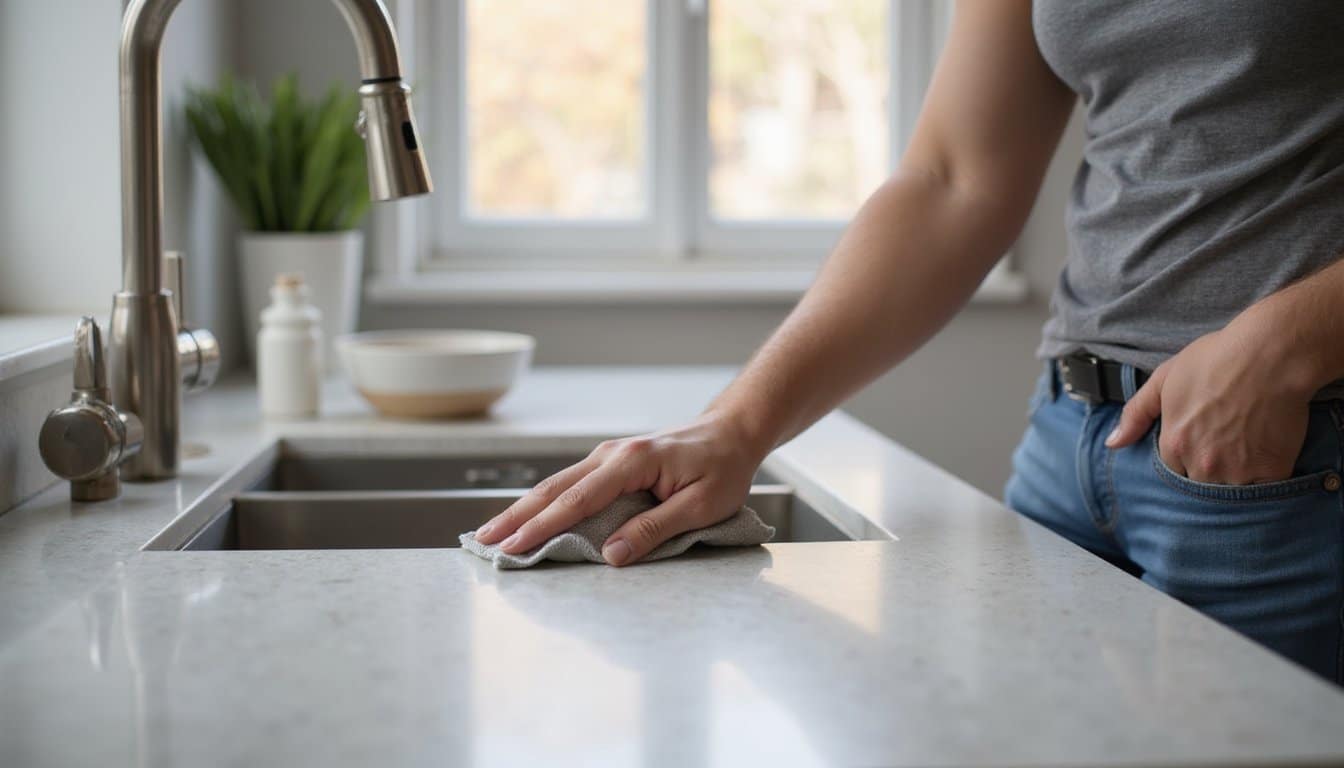
Because cannabis smoke deposits odor-causing compounds, particularly thiols and terpenes like myrcene, onto porous and hard surfaces alike, thorough remediation requires systematic cleaning rather than masking agents.
Cannabis smoke leaves stubborn odor compounds on every surface, effective removal demands targeted cleaning methods, not temporary cover-ups.
Start by vacuuming surfaces to remove loose particulates. For mild residue, apply a white vinegar and water solution or sprinkle baking soda before wiping walls, fixtures, and countertops. Stubborn contamination demands commercial-grade products: use wall wash formulations like Unsmoked Smoke Solve for ceilings and vertical surfaces, or Degrease-All for severe buildup requiring subsequent repainting. Tabac Attack serves as an effective water-based deodorant for initial treatment, while Blaze Haze Eliminator targets residual smoke molecules post-cleaning.
- Assess contamination severity before selecting cleaning agents
- Apply baking soda to carpets and upholstery before vacuuming
- Clean lampshades, blinds, and door hardware with vinegar solutions
- Guarantee complete drying through adequate ventilation after treatment
Remove Weed Smell From Clothes and Fabric
Nearly all cannabis smoke odors embedded in textiles stem from volatile thiols and lipophilic terpenes, compounds that bind to fabric fibers and resist standard washing. You’ll need targeted methods to break these molecular bonds effectively.
Start by soaking garments in lukewarm water with one cup of baking soda for at least one hour, this neutralizes acidic smoke particles. Follow with a machine wash using enzyme detergents, which break down oily resin compounds that standard formulas can’t address. Add one cup of vinegar to the rinse cycle; its acetic acid neutralizes alkaline smoke residues.
For persistent odors, hang clothes in direct sunlight where UV light accelerates dissipation. Overnight, place fabrics in sealed bags with activated charcoal for absorption. Quick treatments include fabric refreshers or laundry pellets to eliminate remaining traces.
Get Weed Smell Off Your Hands and Skin
Cannabis resin and terpenes cling to your skin’s natural oils, so you’ll need to break down these lipophilic compounds rather than simply masking them. Terpenes like myrcene, limonene, pinene, and beta caryophyllene bind readily to sebum, requiring targeted soap and water washing with thorough scrubbing under nails and between fingers.
For persistent odor, consider these proven methods:
- Citrus-based methods: Rub lemon or lime juice directly on hands; the citric acid dissolves resin while limonene counteracts lingering scents
- Alcohol-based cleaners: Hand sanitizer breaks down terpenes quickly but may cause dryness
- Oil dissolution: Coconut or olive oil lifts resin before soap removal
- Abrasive scrubs: Baking soda paste neutralizes odors through mild exfoliation
Always follow with moisturizer to prevent skin irritation from repeated cleaning protocols.
Use an Air Purifier to Eliminate Weed Smoke
Air purifiers equipped with multi-stage filtration systems offer the most effective mechanical solution for eliminating cannabis smoke particles and odor-causing volatile compounds from indoor spaces. HEPA filtration captures 99.97% of 0.3-micron particles, while activated carbon functions as a charcoal deodorizer that adsorbs VOCs and terpenes responsible for persistent odors.
For ideal indoor air quality, position your unit at least three feet above ground, facing the smoke source. Models like the Winix 5500-2 clean 728 cubic feet in 23 minutes using hybrid HEPA-carbon technology. Integrate your purifier with your existing ventilation system or HVAC for enhanced circulation.
Avoid ozone generators, which may create respiratory irritants. Instead, choose certified odor neutralizer technologies with pelleted activated carbon for superior adsorption. Replace filters every 6-8 months to maintain peak performance.
Stop Weed Smell Before It Starts
Because prevention remains more effective than remediation, implementing proactive odor-control measures before cannabis exposure occurs substantially reduces the ventilation burden and cleaning effort required afterward. You’ll achieve better weed smell removal by addressing sources before cannabis smoke odor penetrates fabric upholstery and porous materials.
Prevention beats remediation, stop cannabis odors before they penetrate porous materials and textiles for easier cleanup.
Establish these preventive protocols:
- Optimize indoor ventilation by opening windows and positioning exhaust fans outward before any session begins
- Maximize carbon filtration efficiency by running air purifiers with activated carbon pre-filters continuously in designated areas
- Apply scent masking strategically using essential oil diffusers or odor-absorbing gels placed near consumption zones
- Protect textiles proactively by removing cushions and using washable covers treated with enzyme-based laundry detergent post-exposure
Store all products in airtight containers with activated charcoal inserts. These compliance-aware practices minimize remediation requirements while maintaining acceptable indoor air quality standards.
Florida Addiction Resource LLC provides comprehensive assistance to individuals and families affected by weed dependency. Our organization facilitates connections with accredited treatment providers throughout the state of Florida. We offer guidance in accessing a full spectrum of evidence-based interventions, including cannabis detoxification programs, residential treatment facilities, outpatient therapeutic services, and long-term recovery support systems. To discuss treatment options and determine the most appropriate care pathway for your specific circumstances, please contact our office at (561) 562-4336. Professional consultation is available to help you or your loved one begin the journey toward sustained recovery.
Frequently Asked Questions
Can Neighbors Smell Weed Through Apartment Walls or Vents?
Yes, your neighbors can smell cannabis through apartment walls and vents. Volatile terpenes and smoke particles penetrate porous drywall, travel through shared HVAC ducts, and seep through gaps around outlets, pipes, and door frames. Older buildings with thinner walls allow easier transmission. You’ll reduce odor migration by sealing penetration points with caulk or foam, installing door sweeps, using activated carbon filtration, and creating positive air pressure with fans drawing fresh air inward.
How Long Does Weed Smell Stay in a Car?
Cannabis odor typically lingers in your car for 30, 40 minutes under ideal ventilation, but if you’ve hotboxed or smoked in an enclosed space, expect the smell to persist for several days. Terpenes and oily resin particles bond to porous materials, upholstery, carpets, HVAC filters, and vent ducts, extending persistence considerably. Without active intervention like activated charcoal, cabin filter replacement, or professional ozone treatment, trace odors can cling to surfaces for 24 hours or longer.
Does Weed Smell Stick to Hair and How Do You Remove It?
Yes, weed smell sticks to your hair because sticky terpenes and volatile organic compounds bind to your scalp’s natural oils and porous hair fibers. Indoor smoking intensifies this effect, with odor lingering 24+ hours.
To remove it, you’ll want to wash with clarifying shampoo to cut through oil buildup. For prevention, tie your hair back or cover it before exposure. Dry shampoo offers a quick temporary fix when washing isn’t possible.
Will Air Fresheners Trigger Smoke Detectors in Hotels or Dorms?
Yes, air fresheners can trigger smoke detectors in hotels and dorms. Aerosol sprays release fine particles that disrupt photoelectric sensor beams, while ionization detectors react to smaller mist particles from diffusers. Even electric or humidifier-style diffusers positioned far from detectors have caused nuisance alarms in rental properties. You’ll want to avoid aerosol products entirely and consider that many facilities have sensitive air-quality monitoring systems designed to detect any airborne particulates.
Can Landlords Legally Evict Tenants for Weed Smell Complaints?
Yes, landlords can legally evict you for weed smell complaints. If your lease includes no-smoking clauses or prohibits illegal activities, odor detection alone constitutes a breach, even in states where cannabis is legal. Neighbors’ complaints about smell traveling through vents or hallways support nuisance claims under civil code. You’ll typically receive a violation notice before formal proceedings begin. Medical marijuana protections generally don’t override lease terms, so review your agreement carefully.