






Incense can temporarily mask weed smell, but it won’t eliminate the odor completely. Once the incense stops burning, cannabis scents typically resurface within minutes to an hour. The combination of weed and incense is also culturally linked, potentially signaling what you’re trying to hide. For effective odor control, you’ll need to pair incense with ventilation, activated carbon filters, or air purifiers. Below, you’ll discover the best scents and advanced methods for full odor elimination.
Does Incense Actually Cover Weed Smell?
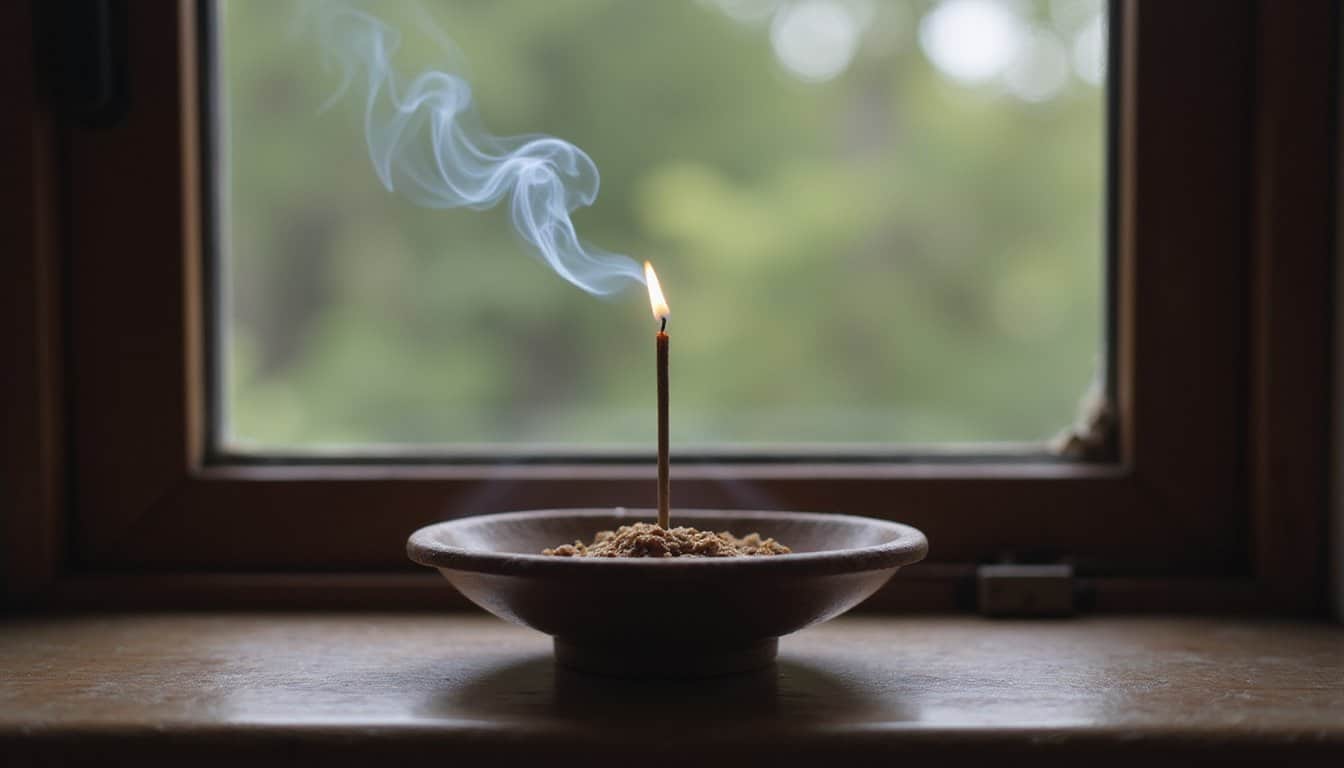
When you burn cannabis, marijuana smoke releases terpenes like myrcene, limonene, and pinene alongside tetrahydrocannabinol and cannabidiol compounds. These molecules bind to fabrics, hair, and surfaces, creating persistent cannabis odor that’s difficult to eliminate. Research shows that terpenes have pharmacological effects even at low concentrations, which explains why the scent can be so noticeable and persistent. One effective method for tackling this issue is removing weed scent using Ozium, a popular air freshener that neutralizes odors instead of merely masking them. Its unique formula allows it to penetrate fabrics and surfaces, helping to eliminate lingering smells from the air and your belongings. For those looking for a quick fix, Ozium can provide immediate relief from the cannabis odor that clings to various areas in your home.
Incense functions as one of many odor masking agents, layering potent fragrances like sandalwood or nag champa over the existing smell. You’ll notice immediate results, the strong aroma can temporarily overpower weed scent while the visual smoke provides additional camouflage. For best results, burning incense before smoking can help establish the masking scent in your space ahead of time. You can also apply essential oils like patchouli to your hands and behind your ears for additional personal odor coverage.
However, incense doesn’t neutralize or chemically break down cannabis compounds. Once burning stops, the underlying marijuana odor often resurfaces within minutes to an hour. Additionally, the incense-cannabis pairing has become so culturally associated with weed use that it may actually signal rather than conceal your activities.
However, incense doesn’t neutralize or chemically break down cannabis compounds. Once burning stops, the underlying marijuana odor, rooted in distinctive weed aromas and scents, often resurfaces within minutes to an hour. Additionally, the incense-cannabis pairing has become so culturally associated with weed use that it may actually signal, rather than conceal, your activities.
Best Incense Scents to Mask Weed Smell
Several incense varieties stand out for their ability to temporarily mask cannabis odor, though you should understand that none actually eliminate the underlying smell.
Incense masks cannabis odor temporarily but never eliminates it, layering scents only buys time, not true odor removal.
Nag Champa combines sandalwood and champa flower for effective weed smell masking. Its slow burn delivers rich coverage against cannabis smoke smell indoors. A soft tree resin in nag champa helps create that slow, pleasant burn.
Patchouli offers deep, spicy-sweet intensity that’s particularly useful for covering up smoke smell in enclosed spaces.
Sandalwood provides warm, woody notes that persist longer than most options, making it popular for incense vs weed odor situations.
Dragon’s Blood blends amber and frankincense for strong coverage, though incense smoke adds respiratory burden.
Lavender delivers a fresh overlay to mask weed smell effectively. Citrus-scented incense also works well as a natural alternative for freshening the air. For best results, crack a window open to allow adequate ventilation and help the smoke escape while the incense works.
Why Incense Alone Isn’t Enough

While incense may seem like a quick fix for cannabis odor, it only masks the smell temporarily rather than eliminating it. Burning incense releases volatile organic compounds and particulate matter that compromise indoor air quality without neutralizing cannabis terpenes. Smoke residue settles on surfaces, creating thirdhand smoke that persists long after fragrances fade.
Combustion byproducts from both sources accumulate in enclosed spaces, increasing respiratory irritation. Odor masking techniques like incense don’t address molecules absorbed into fabrics, walls, or furniture. The distinct aroma of cannabis can linger briefly but doesn’t cling like tobacco smoke, making it easier to manage with bold, earthy scents like sage, lavender, or cedar that balance the familiar skunky smell. Additionally, incense is commonly associated with weed smoking, which can actually raise suspicions rather than deflect them, especially in community living areas like apartments or dorms.
For effective results, you’ll need ventilation systems to remove airborne particles. Activated charcoal and carbon filtration capture odor-causing compounds that incense simply covers. These methods work best when combined, opening windows while running a carbon filter substantially outperforms incense alone. Using baking soda sprinkled on carpets before vacuuming can absorb trapped odors that incense cannot reach. Without addressing the source, you’re adding pollutants rather than solving the problem.
What to Use With Incense for Full Odor Control
Because incense alone only masks cannabis odor without eliminating it, you’ll need additional technology to achieve full odor control. When incense and smoke mixing occurs, your olfactory receptors detect both layers, and human olfaction quickly distinguishes the lingering cannabis odor beneath. Smoke detectors may also trigger from combined particulates. Rather than relying on incense to mask marijuana odor, consider these proven solutions:
- Carbon filters: Adsorb terpenes and VOCs through porous surfaces, addressing marijuana odor persistence at the source
- Oxidation systems: Chemically break down odor molecules into water vapor and CO2, neutralizing rather than masking odors vs neutralizing temporarily
- Air purifiers with ODOGard: Form covalent bonds with odor molecules, reducing airborne terpenes by 99%
These technologies tackle smell detection indoors and odor intensity comparison tests confirm their superiority over fragrance-based approaches alone. Advanced solutions using nanofiber technology provide significantly more surface area for odor-eliminating compounds to interact with cannabis molecules, maximizing removal efficiency. For larger cultivation spaces, air filtration systems placed on intake and exhaust vents can help reduce the strength of odors escaping from grow rooms. Keep in mind that carbon filters require frequent replacement as the porous carbon becomes saturated over time, which can cost $5,000-$10,000 annually for mid-size facilities.
Quick Tricks to Eliminate Weed Smell Fast

How quickly can you actually clear cannabis odor from a room? Understanding how long weed smell lasts helps you choose the right approach. Skunk odor compounds bind to surfaces, so passive air fresheners won’t cut it.
For effective indoor smoking smell control, start with ventilation, open windows and run exhaust fans immediately. Odor neutralizers containing activated carbon work faster than masking sprays because they absorb volatile compounds rather than covering them. HEPA filters capture smoke particles, but you’ll need activated carbon integration to tackle odor molecules. For effective methods to remove weed odor, consider using air purifiers equipped with activated carbon filters, which can significantly reduce unpleasant scents. Additionally, utilizing ozone generators can help eliminate odors by breaking down odor-causing particles in the air. Regular cleaning with odor-neutralizing solutions will also contribute to a fresher environment.
Don’t rely on olfactory fatigue to hide marijuana odor; just because you can’t smell it doesn’t mean neighbors smell weed. Wipe surfaces with vinegar solution and sprinkle baking soda on fabrics. Does incense cover weed smell? Not reliably, these targeted methods deliver faster, measurable results. Continue ventilating the space for at least 30 minutes after smoking to ensure odors don’t settle into your environment. For long-term prevention, store your cannabis in airtight containers to keep strong odors from spreading throughout your living space in the first place. The distinct aroma comes from terpenes and cannabinoids, which is why cannabis produces such a persistent and recognizable scent that requires active elimination rather than simple masking.
If you or a loved one is struggling with weed addiction, you don’t have to face it alone. Florida Addiction Resource LLC is here to connect you with trusted treatment providers throughout Florida. Whether you require cannabis detox treatment programs, residential care, outpatient services, or ongoing recovery support, we’ll guide you to the appropriate resources. Ready to take the next step? Contact us at (561) 562-4336 to discover the care that’s right for you.
Frequently Asked Questions
How Long Does Weed Smell Linger on Clothing After Smoking Indoors?
Weed smell typically lingers on your clothing for 12 to 48 hours after smoking indoors. If you’ve smoked heavily or worn porous fabrics like denim or thick jackets, you’ll notice the scent persists longer, sometimes up to 24 hours or more. Poor ventilation extends this timeline considerably. To speed up odor removal, you should hang clothes outside, use activated charcoal, or wash them with a strong detergent.
Can Landlords Legally Evict Tenants for Cannabis Odor Complaints?
Yes, landlords can legally evict you for cannabis odor, but it depends on your jurisdiction and lease terms. They’ll need to prove the smell markedly interferes with neighbors’ enjoyment or violates a written smoking prohibition in your agreement. Simply possessing legal cannabis isn’t grounds for eviction, landlords must document repeated complaints and demonstrate nuisance. Check your local laws, as protections vary greatly; medical cannabis users often have additional rights in certain states.
Does Weed Smell Travel Through Apartment Walls or Ventilation Systems?
Yes, weed smell travels through apartment walls and ventilation systems. Cannabis smoke particles measure less than 2.5 microns, allowing them to infiltrate cracks, electrical outlets, plumbing gaps, and baseboards. Shared HVAC systems distribute odors throughout multiple units, while terpenes seep through porous materials like drywall and insulation. You’ll find odors persist 24-72 hours in poorly sealed spaces. Activated carbon filters and HEPA systems with carbon can help neutralize these traveling odors effectively.
Will Incense Set off Smoke Detectors in Dorm Rooms or Hotels?
Incense can set off smoke detectors, especially ionization types commonly found in dorms and hotels. You’ll reduce your risk by choosing low-smoke varieties like coreless Japanese sticks and burning only one at a time. Keep incense away from ceiling detectors, open a window, and guarantee good airflow. Avoid synthetic blends that produce denser smoke. In hyper-sensitive settings like non-smoking rooms, even moderate incense smoke may trigger alarms.
Can Drug-Sniffing Dogs Detect Cannabis Through Incense Masking Attempts?
Yes, drug-sniffing dogs can easily detect cannabis through incense masking attempts. You can’t fool a trained detection dog with strong fragrances, they’re specifically trained to isolate cannabis terpenes from competing scents. Dogs identify odor patterns rather than single smells, so layering incense over cannabis actually creates a more distinctive scent profile. Residual traces on your hands, clothing, and containers remain detectable regardless of masking efforts. Don’t rely on incense for concealment.