






Kratom typically kicks in within 5-30 minutes when you take it on an empty stomach, as mitragynine rapidly enters systemic circulation. You’ll reach peak plasma concentrations within 1-2 hours, with maximum effects sustained for 2-4 hours before hepatic metabolism initiates gradual decline. Total duration ranges from 2-6 hours depending on your dose, strain selection, and individual cytochrome P450 enzyme activity. Understanding these pharmacokinetic variables helps you optimize your timing and dosing strategy.
How Long Does Kratom Take to Kick In?
How quickly does kratom produce noticeable effects? The onset time typically ranges from 5 to 30 minutes following oral ingestion, though individual variability exists. Research indicates 79.8% of users experience effects within minutes of consumption.
Several pharmacokinetic factors influence how long does kratom take to kick in. Your metabolic rate, hepatic function, age, and body weight directly impact absorption speed. Gastric contents play a critical role, consuming kratom on an empty stomach accelerates onset, while food delays the absorption process.
The ingestion method also determines timing. Capsules generally produce effects around 10 minutes post-consumption. Kratom can also be brewed as tea or chewed as leaves, which may alter absorption rates. Lower doses tend toward stimulant-like effects with rapid onset, while higher doses shift toward opioid-receptor activation within 5-10 minutes. The strain and potency of the kratom product also affect how quickly effects manifest. Understanding how long does kratom last begins with recognizing these onset variables. Anecdotal reports describe users experiencing increased alertness, talkativeness, positive mood, and euphoria once the effects begin.
When Do Kratom’s Peak Effects Hit?
Kratom’s peak effects typically hit between 1 to 2 hours after consumption, though this window can extend to 4 hours depending on strain type, dosage, and your individual metabolism. You’ll notice peak timing varies markedly based on consumption method, powder and tea formulations reach maximum intensity faster than capsules, while concentrated extracts often accelerate onset. Understanding these variables helps you anticipate when effects will be strongest and plan accordingly for daily responsibilities. During the peak phase, white vein strains deliver an early energizing spike, while red vein varieties produce a longer, more persistent sedative peak. The sedative effects specifically peak between 40-80 minutes after consumption, making this timeframe particularly important to monitor. Because kratom is classified as an herbal supplement rather than a regulated substance, users may underestimate the intensity of these peak effects and the potential risks involved.
Typical Peak Timing
Once kratom’s alkaloids enter your bloodstream, they typically reach peak plasma concentrations within 1-2 hours post-ingestion. This kratom peak time represents maximum receptor binding activity, where mitragynine and 7-hydroxymitragynine achieve ideal interaction with opioid and adrenergic receptors.
Understanding how long does kratom take to work helps establish realistic expectations. Kratom onset time generally occurs within 15-30 minutes, with effects building progressively toward peak intensity. The strongest pharmacological response manifests during this 1-2 hour window, though some users report peaks extending to 3-4 hours depending on individual metabolic factors. The total duration of effects ranges from 2 to 7 hours, with the intensity tapering after the 4-hour mark.
Strain variations influence peak characteristics considerably. White vein varieties demonstrate earlier, sharper peaks with stimulating properties. Red vein strains exhibit prolonged sedative peaks. Green strains produce moderate peaks balancing both effects. Your metabolism, dose, and stomach contents directly modulate these timelines.
Factors Affecting Peak
When exactly kratom’s effects reach their maximum intensity depends on several interacting physiological and product-related variables. Your metabolic rate, gastric contents, and product formulation collectively determine how long does kratom take to work and when peak effects manifest.
| Factor | Impact on Peak Timing |
|---|---|
| Metabolism | Faster rates yield earlier peaks |
| Stomach contents | Empty stomach advances peak by 30-60 minutes |
| Product form | Liquids peak fastest; capsules delay 15-30 minutes |
| Dosage | Higher doses correlate with accelerated onset |
| Tolerance | Regular use alters kratom effects timeline |
Understanding these variables helps you predict your kratom peak effects more accurately. Body weight, hydration status, and age further modulate absorption kinetics, creating individual variation in the kratom effects timeline across users. Research indicates that mitragynine exhibits dose-dependent effects, acting as a stimulant at lower doses while producing opioid-like effects at higher doses, which significantly influences when and how intensely peak effects are experienced. Additionally, red vein strains tend to produce longer-lasting effects compared to white strains, which may also influence the timing and duration of peak experiences. Most users report that peak effects are reached approximately 1-1.5 hours after consumption, though this window can shift based on the factors outlined above.
Peak Duration Explained
After absorption and distribution phases complete, mitragynine and 7-hydroxymitragynine concentrations reach maximum plasma levels, this pharmacokinetic milestone corresponds to peak subjective effects. You’ll typically experience this zenith between one to two hours post-ingestion, though individual variability exists.
Understanding how long does kratom high last requires examining alkaloid receptor binding dynamics. Peak kratom duration generally extends 30-90 minutes before gradual decline begins. White vein varieties demonstrate compressed peak windows with pronounced stimulatory effects, while red vein strains exhibit prolonged peak phases with sustained sedative profiles.
How long does kratom work at maximum intensity depends on dose magnitude, hepatic metabolism efficiency, and prior tolerance development. Tolerant users may notice sedative peaks occurring within 40-80 minutes. Green vein strains offer intermediate peak characteristics, balancing both stimulating and calming properties during this critical pharmacodynamic window.
How Long Do Kratom’s Effects Last?
How long kratom’s effects persist depends primarily on dosage, strain type, and individual metabolic factors. You’ll typically experience active effects lasting 2 to 6 hours, with peak intensity occurring between 2 and 4 hours post-ingestion.
When considering how long does kratom take to work, you should also factor in how long for kratom to kick in affects total duration. White vein strains deliver stimulating effects lasting up to 5 hours, while red vein varieties produce sedating effects extending to 6 hours.
Lower doses yield approximately 2-hour effects, whereas higher amounts sustain impact for 5 hours or longer. The kratom comedown phase introduces lingering fatigue that may extend into the following day, particularly after consuming heightened doses. Concentrated extracts typically prolong duration beyond standard powder formulations. Kratom’s half-life ranges from 3 to 8 hours, which helps explain why residual effects may linger even after the primary experience subsides. With repeated use, individuals may develop a tolerance, requiring higher doses to achieve the same effects and potentially extending the duration of the substance’s presence in the body. Lower doses typically yield effects lasting around two hours, whereas higher amounts can sustain their impact for five hours or longer. When discussing kratom effects and side effects, it’s important to recognize that the comedown phase may introduce lingering fatigue that extends into the following day, particularly after consuming higher doses. Concentrated extracts often prolong the overall duration compared to standard powder formulations due to their increased potency. Kratom’s half-life ranges between 3 and 8 hours, which helps explain why residual effects can persist even after the primary experience subsides. With repeated use, individuals may develop tolerance, requiring higher doses to achieve the same effects and potentially extending the duration of the substance’s presence in the body.
How Form Affects Timing: Powder, Capsules, and Tea
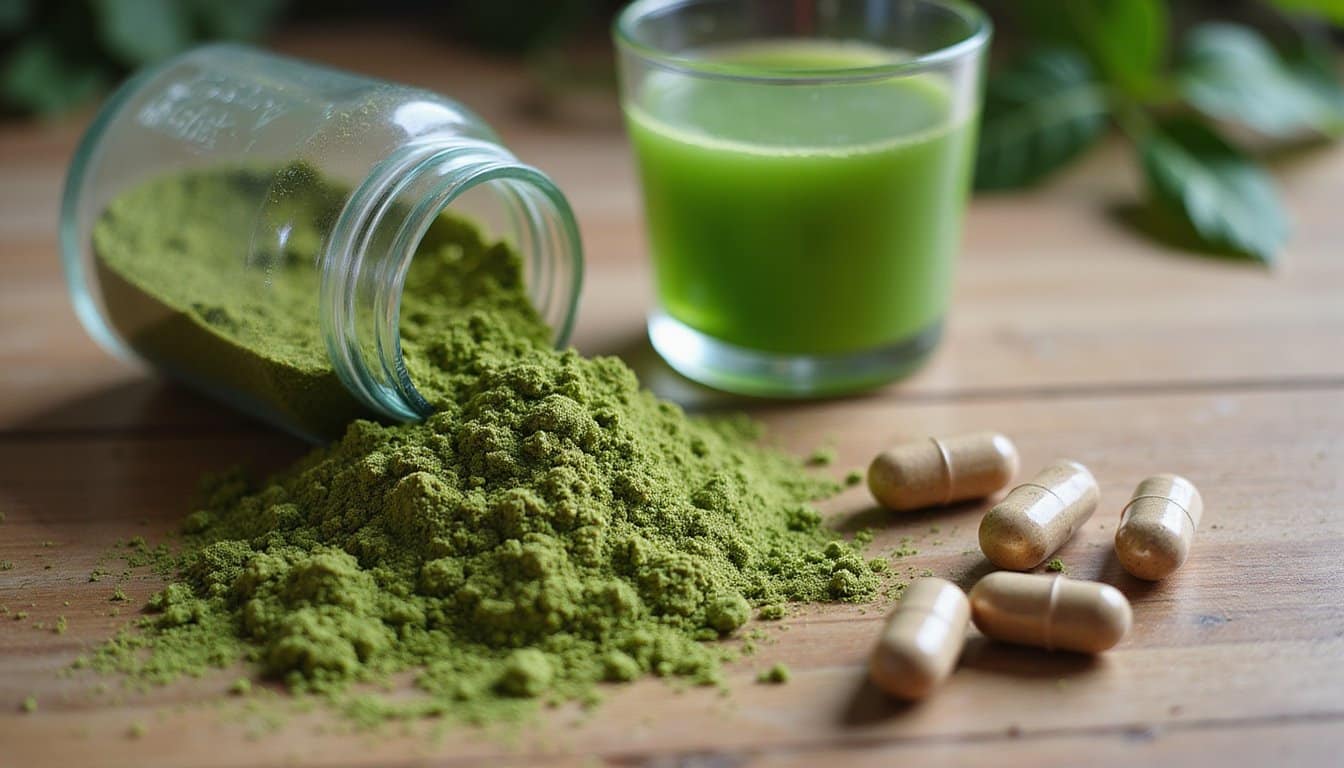
The method of kratom consumption directly influences absorption kinetics and effect onset timing. Understanding how long does kratom take to work requires examining each delivery mechanism’s pharmacokinetic profile.
Kratom powder onset occurs within 10-30 minutes using toss and wash administration. Direct contact with gastric mucosa enables rapid alkaloid absorption while retaining full-spectrum potency. This method delivers a fast-acting, lightning bolt-like effect compared to other consumption forms.
Kratom capsules onset extends to 30-60 minutes due to vegetarian shell dissolution requirements. The gelatin barrier must degrade before alkaloid release initiates. This extended timeline makes capsules a convenient but slower option for those who want to avoid the raw, earthy taste of powder.
Tea demonstrates intermediate onset at 15-30 minutes. Pre-dissolved alkaloids in liquid form bypass mechanical breakdown phases, though brewing may slightly reduce alkaloid concentration. The alkaloids responsible for these effects, primarily mitragynine and 7-hydroxymitragynine, are naturally occurring compounds retained from the dried Mitragyna speciosa leaves.
Duration correlates inversely with onset speed, powder maintains effects for 4-6 hours, while faster-absorbing forms typically produce shorter effect windows.
What Speeds Up or Slows Down Kratom?
Your stomach contents, metabolic rate, and tolerance level directly influence how quickly kratom’s alkaloids reach systemic circulation. An empty stomach accelerates gastric emptying and intestinal absorption, while food, particularly high-fat meals, delays alkaloid bioavailability by slowing dissolution and transit time. Individual variations in cytochrome P450 enzyme activity and accumulated tolerance further modulate both onset speed and effect duration. The product form you choose also matters significantly, as powder works fastest with effects typically felt in 15-30 minutes compared to capsules which require additional time for the gelatin shell to dissolve.
Empty Stomach Effects
Taking kratom on an empty stomach accelerates mitragynine absorption through the gastrointestinal tract, producing effects within 10-30 minutes for most users. This enhanced onset speed occurs because alkaloids encounter no food barriers during intestinal uptake. Some individuals report effects manifesting within 5-10 minutes when using teas or extracts under fasted conditions.
The duration profile shifts when you consume kratom without food. Peak plasma concentrations typically occur at 1.5-2.5 hours post-ingestion, with total effect duration ranging from 2-6 hours. However, empty stomach administration intensifies both therapeutic and adverse responses. You’re more likely to experience nausea or gastrointestinal discomfort, particularly at higher doses. Starting with smaller servings minimizes gastric irritation while maintaining rapid absorption kinetics. After-effects may persist into the following day with potent doses.
Food Delays Absorption
How substantially does food alter kratom’s absorption timeline? When you consume kratom with food, your digestive system prioritizes meal processing, causing significant delays. Food delays absorption by 45-90 minutes depending on meal composition. Your dietary intake influences metabolism and absorption rates considerably.
| Meal Type | Powder Onset | Capsule Onset |
|---|---|---|
| Empty Stomach | 15-30 min | 30-60 min |
| Light Meal | 45-90 min | 60-90 min |
| Heavy Meal | 60-90 min | 60-120 min |
Heavy vs light meals produce markedly different outcomes. Fatty, calorie-dense meals extend onset to 60-120 minutes for encapsulated forms, while fruit-based meals cause minimal delays. Full stomach consumption yields milder, more gradual effects as alkaloids compete with nutrients for intestinal absorption pathways.
Metabolism and Tolerance
Several liver enzymes determine how quickly your body processes kratom’s active compounds. CYP3A4 serves as the primary pathway for metabolism, converting mitragynine to the more potent 7-hydroxymitragynine. Your CYP2D6 and CYP2C9 enzymes contribute to additional breakdown, creating individual variability in how long effects persist.
Plasma protease activity also influences duration. Human plasma converts 7-hydroxymitragynine to mitragynine pseudoindoxyl over time, with cysteine proteases and metalloproteases accelerating this degradation. This conversion happens faster in humans than in other species.
Enzyme inhibition effects compound these variables. Kratom suppresses CYP3A4 activity, which can slow clearance of both its own alkaloids and other medications you’re taking. With repeated use, tolerance develops as your body upregulates metabolic pathways, requiring higher doses to achieve previous effects. Additionally, kratom side effects to consider may include nausea, dizziness, and in some cases, increased anxiety. Users should also evaluate specific safety concerns, such as is kratom safe during pregnancy, as there is limited clinical research establishing its safety profile for pregnant individuals. The risk of dependence can rise with prolonged use, further complicating the management of any pre-existing health conditions. For these reasons, it is essential to consult a qualified healthcare professional before incorporating kratom into your routine, particularly if you are pregnant, planning to become pregnant, or currently taking other medications that could interact with its active compounds. Enzyme inhibition effects compound these variables. Kratom suppresses CYP3A4 activity, which can slow the clearance of both its own alkaloids and other medications you may be taking. With repeated use, tolerance can develop as the body adapts and upregulates metabolic pathways, requiring higher doses to achieve previous effects. This pattern is often observed in discussions surrounding Kratom and pain, where individuals may increase intake in an attempt to maintain perceived analgesic benefits, potentially elevating risk exposure over time.Additionally, kratom side effects to consider may include nausea, dizziness, and in some cases, increased anxiety. Users should also evaluate specific safety concerns, such as is kratom safe during pregnancy, as there is limited clinical research establishing its safety profile for pregnant individuals. The risk of dependence can rise with prolonged use, further complicating the management of any pre-existing health conditions. For these reasons, it is essential to consult a qualified healthcare professional before incorporating kratom into your routine, particularly if you are pregnant, planning to become pregnant, or currently taking other medications that could interact with its active compounds.
Your Complete Kratom Timeline Hour by Hour
The pharmacokinetic profile of kratom follows a predictable absorption-distribution-metabolism pattern, though individual variables create meaningful timeline differences. Understanding how long does kratom take to work requires examining each phase systematically.
0-45 minutes: Initial absorption occurs, with onset varying based on empty stomach vs full stomach conditions. Powders activate within 15-30 minutes; capsules require 25-45 minutes.
1-2 hours: Peak plasma concentrations develop, producing maximum effect intensity.
2-4 hours: Sustained peak effects continue before gradual decline initiates.
4-6 hours: Progressive effect diminishment occurs as hepatic metabolism processes active alkaloids.
6-8 hours: Baseline restoration completes for most users. How long does kratom stay in your system extends beyond perceptible effects, with alkaloid metabolites detectable considerably longer than subjective duration suggests.
If you or a loved one is struggling with kratom addiction, you don’t have to navigate it alone. Florida Addiction Resource LLC is here to connect you with trusted treatment providers throughout Florida. Whether you need kratom detox treatment programs, residential care, outpatient services, or ongoing recovery support, we’ll help you find the appropriate resources. Ready to take the next step? Contact us at (561) 562-4336 to discover the care that’s right for you.
Frequently Asked Questions
Does Kratom Last Longer if I Take It With Other Substances?
Yes, combining kratom with other substances can extend its duration. When you mix kratom with CNS depressants like alcohol or benzodiazepines, you’ll likely experience prolonged sedation due to synergistic hepatic metabolism competition. These substances compete for the same cytochrome P450 enzymes, slowing kratom’s clearance rate. This interaction intensifies effects and delays elimination, but it also markedly increases your risk of respiratory depression and other dangerous adverse reactions.
Why Do I Still Feel Mentally Foggy Hours After Kratom Wears Off?
Your lingering mental fog occurs because kratom’s alkaloids alter neurotransmitter regulation beyond the primary effects. Mitragynine and 7-hydroxymitragynine interact with opioid receptors, disrupting dopamine and serotonin systems. This dysregulation impairs concentration, decision-making, and short-term memory even after subjective effects fade. Regular use compounds this by dulling natural receptor sensitivity. Additionally, kratom-induced sleep disturbances intensify cognitive impairment, creating residual fatigue that persists hours later as your brain struggles to recalibrate its signaling pathways.
Can Tolerance Make Kratom Effects Feel Shorter Over Time?
Yes, tolerance markedly shortens kratom’s perceived duration. When you use kratom regularly, your opioid receptors downregulate, requiring larger doses to achieve baseline effects. Despite increased dosing, you’ll notice effects dissipating within hours rather than lasting the typical 2-5 hour window. Peak effects still occur 1-2 hours post-ingestion, but the overall experience compresses. Tolerance typically develops within weeks of consistent use, making stimulating effects diminish to under 5 hours even with dose escalation.
How Long Should I Wait Before Driving After Taking Kratom?
You should wait at least six hours after taking kratom before driving. Peak impairment occurs one to two hours post-ingestion, but sedating strains can extend cognitive and motor deficits beyond this window. Kratom’s metabolites remain detectable for one to two days, with trace amounts persisting up to eight days. If you’re experiencing drowsiness, confusion, or delayed reaction times, you shouldn’t drive regardless of elapsed time since your last dose.
Will Kratom Keep Me Awake if I Take It in the Evening?
Whether kratom keeps you awake depends on strain type and dose. White vein and Maeng Da strains produce stimulating effects lasting 1-5 hours, which can interfere with sleep onset. Red vein strains promote sedation within 2-4 hours post-ingestion. Your metabolism also matters, slower metabolizers experience prolonged effects up to 6-8 hours. If you’re taking stimulating strains in the evening, you’ll likely experience wakefulness. Lower doses minimize this risk compared to higher amounts.