

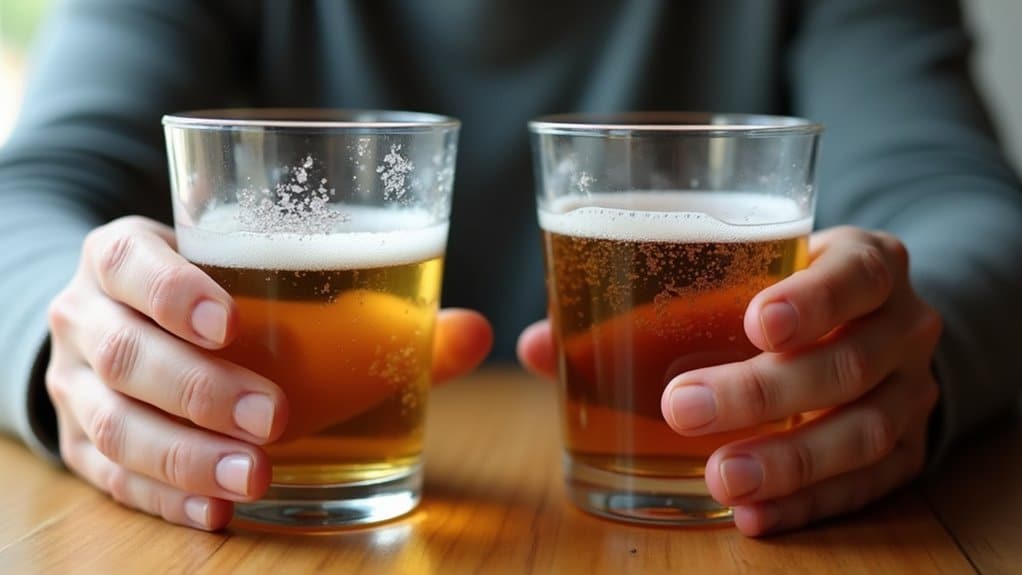
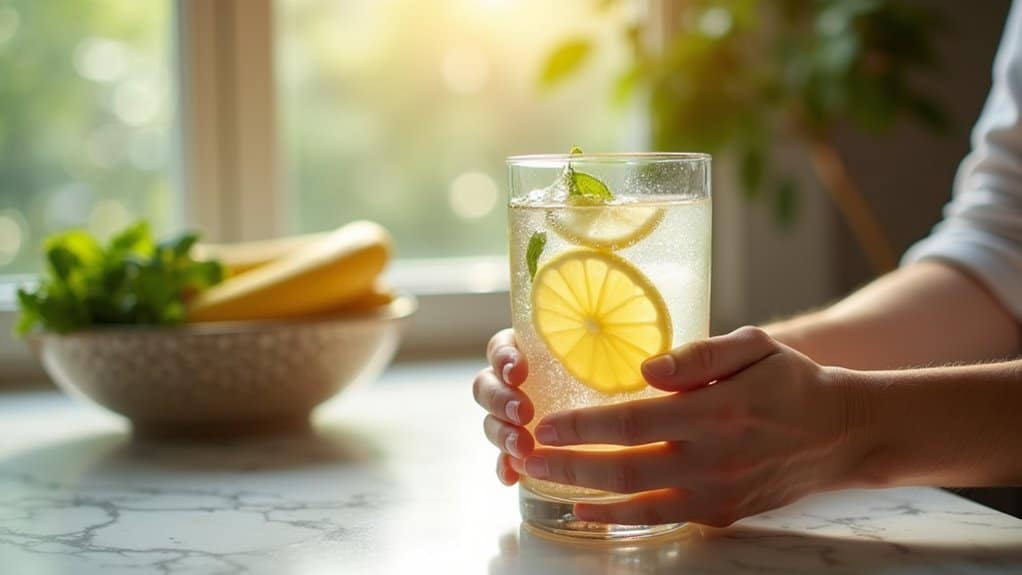
To get rid of water retention after drinking, you’ll want to rehydrate steadily, drinking 250, 500 ml of water hourly until your urine turns pale yellow. Balance your electrolytes with low-sugar options and food-based sources like broth, bananas, and leafy greens. Keep sodium under 2,000 mg daily. Add light movement, elevate your legs, and sleep with your head raised. Give your body time to normalize. Below, you’ll find exactly how each step works.
Key Takeaways
- Rehydrate steadily by drinking 250, 500 ml of water hourly until your urine turns pale yellow.
- Restore electrolytes with low-sugar drinks or food sources like broth, bananas, yogurt, and leafy greens.
- Limit sodium to under 2,000 mg daily by avoiding salty snacks, processed foods, and restaurant meals.
- Move gently, elevate your legs, and sleep with your head raised to drain retained fluid.
- Avoid sugary drinks, caffeine, NSAIDs, and more alcohol, since they worsen dehydration and fluid retention.
How do you get rid of water retention after drinking

To get rid of water retention after drinking, start by rehydrating. Drink 250 to 500 ml of plain water per hour until your urine turns pale yellow, aiming for 2, 3 quarts daily to flush excess retained water. Replenish lost electrolytes with low-sugar options, broth, yogurt, bananas, or diluted sports drinks. Eat potassium-rich foods like avocados, spinach, and sweet potatoes to balance electrolytes and reduce retention. Limit sodium to under 2,000 mg daily by avoiding salty snacks and processed foods. Move your body, walk 10 to 20 minutes after meals to stimulate circulation and lymphatic drainage. Finally, hold off on further alcohol, NSAIDs, and heavy salty meals until symptoms resolve.
Why rehydration is the most important step
Rehydration is the most important step because alcohol is a diuretic, and it triggers your body to expel more fluid than you take in. This fluid loss disrupts your electrolyte balance, prompting your body to retain water once you stop drinking. To reverse this, drink 250 to 500 ml of plain water per hour until your urine reaches pale yellow. You can also include hydrating beverages like coconut water, skim milk, or electrolyte drinks to replace lost fluids faster. Aim for 2 to 3 quarts of water daily to flush excess retained water over time. Restoring proper hydration signals your body that it no longer needs to hold onto fluid, which reduces bloating and helps your system return to balance.
How electrolytes and balanced sodium help your body normalize
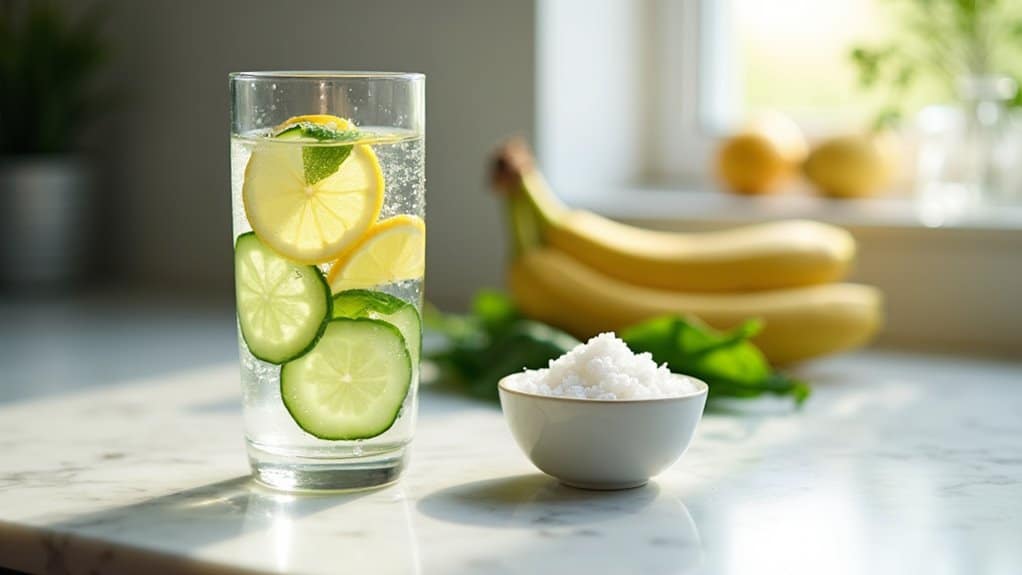
Electrolytes work alongside water to restore the balance alcohol disrupts, and getting them right is what actually normalizes your fluid levels. Start by limiting sodium to under 2,000 mg daily, since excess sodium tells your body to hold onto water. Skip salty snacks, processed foods, frozen meals, pizza, and restaurant-prepared meals while you recover. Add electrolytes once daily for the first few days, choosing low-sugar options to avoid worsening bloat. You can also rely on food-based sources like broth, yogurt, bananas, oranges, potatoes, and leafy greens. If heavy drinking cost you sodium, potassium, and chloride, use oral rehydration solutions or diluted sports drinks to replace what’s lost. Balancing these minerals lets your kidneys regulate fluid properly, so retained water finally moves out instead of lingering.
How movement, sleep, and time support fluid balance
Movement and rest give your body the physical push it needs to clear retained fluid. Walking for 10 to 20 minutes after meals promotes digestion and fluid movement, while regular exercise stimulates circulation and lymphatic drainage. Elevating your legs above heart level moves fluid out of your ankles and feet, and compression garments improve blood flow. At night, elevate your head and sleep on your back to reduce facial bloating and pooling. Give your body time. Retained water clears gradually.
| Strategy | Action | Benefit |
|---|---|---|
| Post-meal walk | 10, 20 minutes | Aids digestion, fluid movement |
| Leg elevation | Above heart level | Drains ankles, feet |
| Compression wear | Socks, stockings | Improves circulation |
| Sleep position | Back, head elevated | Reduces facial bloating |
What doesn’t work (and myths to skip)
Several popular fixes do nothing for alcohol-related water retention. Don’t reach for sugary or caffeinated beverages hoping they’ll flush you out, they actually worsen dehydration and fluid retention. Skip the salty snacks, processed foods, and heavy fatty meals; they push your sodium higher and make bloating linger. Don’t turn to NSAIDs for relief, either, since they can aggravate fluid balance rather than fix it. Loading up on more alcohol won’t “reset” anything; it only deepens the problem. Be cautious with diuretic supplements like dandelion or buchu, too, they aren’t magic, and using them without monitoring electrolytes or maintaining hydration can backfire. Consult a doctor first. Real recovery comes from water, electrolytes, movement, and time, not shortcuts.
Why the only real prevention is drinking less
The only real prevention is drinking less, because alcohol itself is the root cause that hydration, electrolytes, and movement can’t address. Every drink triggers fluid shifts, sodium retention, and inflammation that no amount of water or potassium fully reverses. You can soften the symptoms, but you can’t prevent them while you’re still drinking heavily.
That’s why moderation matters most. Practice it by limiting your intake, and you’ll reduce the frequency and severity of bloating episodes before they start. Alternate each alcoholic drink with a full glass of water, cap your total consumption, and give your body time to recover between sessions.
The strategies in this article help you bounce back faster, but they’re recovery tools, not shields. If you want real prevention, drink less.
How Florida Addiction Resource helps people who want to cut back or quit
Florida Addiction Resource helps people who want to cut back or quit drinking by offering structured support that addresses the root cause. You’ll get a personalized assessment that clarifies your current drinking patterns and identifies realistic goals. Whether you want to reduce intake or stop entirely, the team connects you with evidence-based treatment options, including counseling, medical support, and relapse-prevention strategies. You won’t navigate the process alone; trained professionals guide each step, adjusting the plan as your needs change. If bloating and water retention have become recurring signs of heavier drinking, that’s worth taking seriously. Reaching out gives you access to resources that target the underlying habit, not just the symptoms, so you can protect your long-term health.
If You’re Fixing This Bloat Often, the Real Fix Is Upstream
Rehydrating and cutting sodium will clear the water weight, but if you’re reaching for these steps after most weekends, the pattern behind them is worth an honest look. Florida Addiction Resource helps you assess where your drinking actually sits, no pressure, no judgment, and connects you with evidence-based support to match, including alcohol detox when your body needs a safe, supervised start.
Call (561) 562-4336 now to speak with a specialist, or verify your insurance. Confidential, and we’ll walk you through the next step.
Frequently Asked Questions
How Long Does Alcohol-Related Water Retention Typically Last?
You’ll typically notice alcohol-related water retention easing within a few days, since the recommended electrolyte support only lasts “the first few days” while your body rebalances. To speed things up, you should hydrate steadily, limit sodium under 2,000 mg daily, and stay active to flush retained fluid. If your bloating doesn’t resolve or worsens, it’s worth checking with a doctor, especially before you start any diuretic supplements.
Can Water Retention After Drinking Indicate a Serious Health Problem?
Usually it won’t, since mild water retention after drinking is a temporary, normal response that resolves on its own. However, you should pay attention to warning signs. If you notice persistent swelling, significant weight gain, shortness of breath, or reduced urination, these could signal underlying heart, liver, or kidney issues. Don’t ignore symptoms that linger beyond a few days consult your doctor promptly to rule out anything serious.
Does the Type of Alcohol Affect How Much Water I Retain?
Yes, the type of alcohol you drink can influence how much water you retain. Drinks high in sodium or sugar like cocktails, mixers, and certain beers tend to worsen retention more than plain spirits. To counter this, you’ll want to alternate each alcoholic drink with a full glass of water and avoid sugary or salty mixers. Choosing lower-sugar options and staying hydrated throughout helps minimize the bloating you’ll experience afterward.
Why Does My Face Look Puffy After Drinking Alcohol?
Your face looks puffy because alcohol dehydrates you, prompting your body to retain water in tissues, including your face. Fluid pools overnight while you sleep lying down, collecting around your eyes and cheeks. High sodium intake from drinks and salty snacks worsens this retention. To reduce it, elevate your head and sleep on your back, which helps prevent fluid from pooling in your face and easing morning puffiness.
Can Certain Medications Worsen Water Retention When Combined With Alcohol?
Yes, certain medications can worsen water retention when combined with alcohol. You’ll want to avoid NSAIDs, since they promote fluid retention and compound alcohol’s effects. If you’re taking diuretic supplements like dandelion or buchu, monitor your electrolytes and maintain hydration carefully, as combining them with alcohol risks imbalances. Always consult your doctor before starting new supplements, and hold off on NSAIDs and heavy salty meals until your symptoms resolve.