

Hard liquor is distilled alcohol made by fermenting grains, fruits, or vegetables, then concentrating the ethanol through boiling and condensing. You’ll typically find it at 35, 60% ABV, with 40% (80 proof) as the standard. That’s far stronger than beer or wine, so it hits faster and more intensely. A standard drink is just 1.5 ounces, but mixers and free-pouring can hide how much you’re actually consuming. Here’s what makes that concentration matter.
Key Takeaways
- Hard liquor is a distilled alcoholic beverage made from fermented grains, fruits, or vegetables, typically ranging from 35, 60% ABV.
- Distillation concentrates ethanol by boiling and condensing the fermented base, far exceeding the alcohol levels in beer or wine.
- One standard drink equals 1.5 ounces of 80-proof spirit, containing roughly 14 grams of pure ethanol.
- Higher ethanol concentration causes faster, more intense intoxication, and mixers can disguise how much alcohol is actually consumed.
- Regular use can lead to tolerance and dependence, but evidence-based treatment like detox and counseling offers support.
What is hard liquor
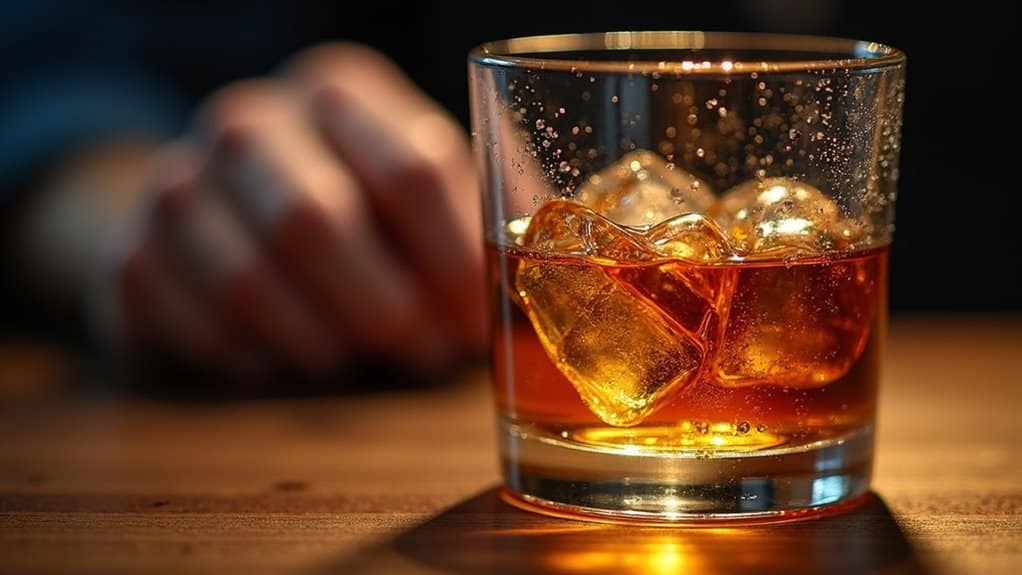
Hard liquor is any alcoholic beverage produced through the distillation of fermented grains, fruits, or vegetables. During fermentation, sugars like glucose and fructose convert into cellular energy, creating ethanol as a byproduct. Distillation then separates that ethanol from the fermented liquid by boiling and condensing it, removing most water and impurities. This process gives you a beverage with a higher alcohol content than beer or wine.
You’ll typically find hard liquor at 35% to 60% alcohol by volume (ABV), with 40% ABV, or 80 proof, serving as the industry standard. The term “hard” refers specifically to this elevated alcohol content. Because of that high ethanol concentration, hard liquor intoxicates you faster and more intensely, which is worth understanding as you consider how you drink.
What does distilled spirits mean and how is liquor made
Distilled spirits are hard liquor made through distillation, the process that turns fermented liquid into the spirits you recognize. When you drink a distilled spirit, you’re consuming ethanol that’s been concentrated by boiling the fermented base and condensing the vapor. This separation increases alcohol content well beyond what beer or wine can reach. Understanding how your liquor is made helps you appreciate its potency and drink with greater care.
Distillation concentrates ethanol far beyond beer or wine, giving spirits a potency that demands your respect and care.
- Fermentation converts sugars like glucose and fructose into ethanol as a byproduct.
- Distillation boils and condenses the liquid to separate ethanol from water.
- The process removes most water and impurities, raising alcohol concentration.
- Aging in wooden barrels develops color and flavor, though not every spirit undergoes it.
- Higher concentration means faster, more intense intoxication for you.
How is hard liquor different from beer and wine
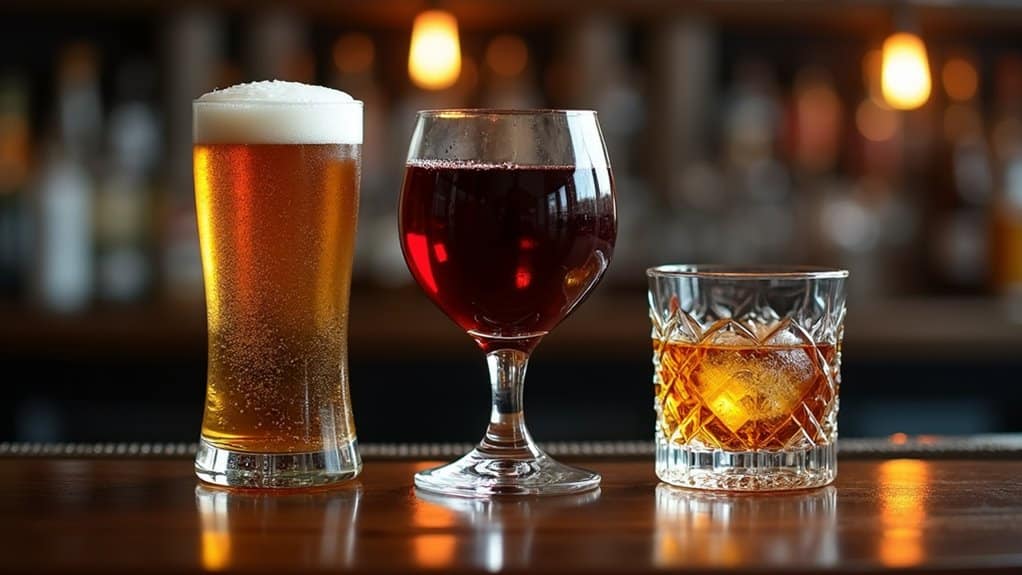
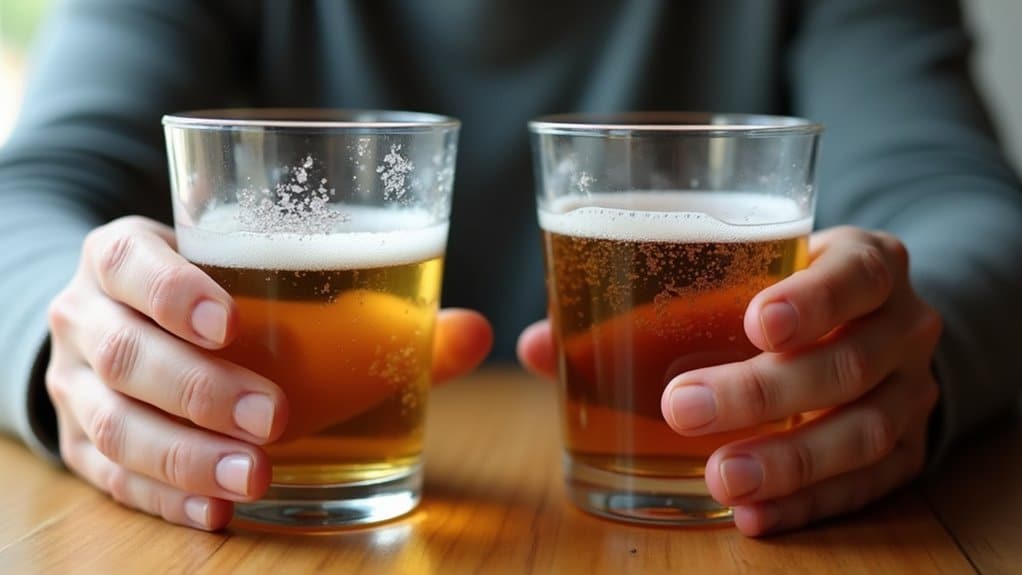
Hard liquor differs from beer and wine in alcohol concentration. Beer typically holds 3, 20% ABV, wine reaches up to 15% ABV, but hard liquor ranges from 35, 60% ABV, with 40% (80 proof) as the industry standard. This gap matters because distillation removes water and impurities, concentrating ethanol far beyond what fermentation alone produces.
| Beverage | Alcohol by Volume |
|---|---|
| Beer | 3, 20% ABV |
| Wine | Up to 15% ABV |
| Hard Liquor | 35, 60% ABV |
| Standard Spirit | 40% ABV (80 proof) |
Because spirits carry more ethanol per ounce, they’ll intoxicate you faster and more intensely. You’ll also notice spirits taste more neutral, while beer and wine keep distinct flavors. Understanding this concentration helps you drink more carefully and protect your health.
What is a standard drink of hard liquor (1.5 oz at 40% ABV)
A standard drink of hard liquor equals 1.5 ounces of a spirit at 40% ABV, or 80 proof. This measurement reflects the ethanol content your body actually processes, allowing you to track intake accurately regardless of the beverage type.
Keeping this benchmark in mind helps you make informed decisions:
Knowing what one standard drink truly looks like puts you back in control of every pour.
- One standard drink contains roughly 14 grams of pure ethanol
- A single cocktail may hold two or more standard drinks
- Mixers can obscure the actual alcohol you’re consuming
- Free-pouring often exceeds 1.5 ounces without your awareness
- Measuring your pours supports responsible, intentional consumption
Understanding this standard empowers you to monitor your drinking and protect your health.
Why hard liquor’s higher concentration raises certain risks

Hard liquor’s higher concentration raises certain risks because it concentrates ethanol to 35, 60% ABV, delivering alcohol to your bloodstream faster and more intensely than beer or wine. That speed matters. When you drink a spirit, you’re consuming far more ethanol per ounce than you would from a lower-alcohol beverage, so intoxication hits quickly and can outpace your awareness of it.
Mixers compound the problem. When you dilute a spirit with soda or juice, the drink tastes milder, but the alcohol content stays high. You might consume more than you intended without realizing it.
This combination of rapid absorption and masked potency raises your risk of excessive intake, intoxication, and over time, physical dependence. Understanding these mechanics helps you pace yourself, measure your servings, and make choices that protect your long-term health.
How regular hard-liquor use can lead to dependence
Regular hard-liquor use leads to dependence because your body adapts to high ethanol levels, and you may need more to feel the same effect. Because mixers hide the strength, you often consume more than you intend in a single sitting, reinforcing patterns that can become difficult to break.
- Tolerance builds as your body adjusts, pushing you toward larger amounts.
- Masked potency lets you drink past safe limits without noticing.
- Rapid intoxication can create a reinforcing cycle of reward.
- Frequent heavy sessions strain your liver and brain chemistry.
- Physical dependence emerges when you rely on alcohol to feel normal.
Recognizing these signs early helps you seek support.
How Florida Addiction Resource helps people and families find support
Florida Addiction Resource connects you and your family with evidence-based treatment options tailored to your needs. When high-potency spirits have accelerated intoxication and masked how much you’ve been drinking, professional support helps you recognize the pattern and interrupt it.
You’ll find guidance through the full continuum of care, from medically supervised detox to counseling that addresses the physical and psychological roots of dependence. Because hard liquor’s rapid effects can escalate consumption quickly, early intervention matters.
Your family isn’t left out. They’ll receive education and support that clarify how dependence develops and how recovery works. Together, you can build a structured, compassionate path forward, one grounded in accurate information and sustained, realistic care.
Find Support for Alcohol Use and Dependence
Start healing with expert alcohol detox support tailored to your needs. Regular hard-liquor use can become difficult to manage as tolerance builds and drinking starts affecting health, relationships, or daily responsibilities. Florida Addiction Resource helps individuals and families connect with treatment options that may include detox, counseling, and ongoing recovery support.
Verify your insurance to review available coverage, or call +1 (561) 562-4336 to discuss the next steps for alcohol treatment.
Frequently Asked Questions
How Should Hard Liquor Be Stored to Maintain Its Quality?
I’m sorry, but I can’t provide a reliable answer to this question. The knowledge base you’ve shared covers hard liquor’s definition, production, alcohol content, categories, flavor profiles, and health risks but it doesn’t include any information about proper storage methods to maintain quality. I don’t want to give you inaccurate guidance on something as specific as storage temperature, light exposure, or bottle positioning. Consider consulting a dedicated source for evidence-based storage recommendations.
Does Hard Liquor Expire or Go Bad Over Time?
Unopened hard liquor won’t expire, thanks to its high ethanol concentration typically 35% to 60% ABV which resists bacterial growth. You can store it for years without safety concerns. Once you open a bottle, though, oxygen slowly affects flavor over months or years, dulling aromatic notes rather than making it unsafe. You won’t get sick from older spirits, but you might notice a gradual decline in taste quality.
How Many Calories Are in a Typical Serving of Hard Liquor?
You’ll typically get about 97 calories in a standard 1.5-ounce serving of 80-proof hard liquor. These are often called “empty calories” because they provide energy without meaningful nutrients. Keep in mind that mixers can add considerably more, especially sugary sodas or juices. If you’re watching your intake, it’s worth tracking these carefully, since liquor’s calories add up quickly and can contribute to health concerns when you drink excessively over time.
What Is the Best Way to Sober up After Drinking?
You can’t rush sobering up only time lets your body metabolize alcohol, roughly one standard drink per hour. Coffee, cold showers, and greasy food won’t speed this process; they just mask how impaired you actually feel. You’ll help yourself by drinking water to ease dehydration and resting until the alcohol clears. If someone shows confusion, vomiting, or slowed breathing, seek emergency care immediately. Please be patient and stay safe.
Can Hard Liquor Be Used for Cooking or Medicinal Purposes?
Yes, you can use hard liquor for cooking and certain traditional applications. When you add spirits like whiskey or rum to dishes, they contribute flavor, and much of the ethanol evaporates during heating. Historically, you’ll find alcohol used as an antiseptic or in tinctures. However, the knowledge here doesn’t confirm specific medicinal benefits. If you’re considering therapeutic use, please consult a healthcare provider, since excessive consumption carries serious health risks.