






Yes, cannabis-induced psychosis is real and well-documented in clinical research. When you use high-potency THC products daily, you’re overstimulating your brain’s dopamine pathways, which can trigger psychotic episodes. Studies show daily users of potent cannabis face nearly five times the psychosis risk compared to non-users. The EU-GEI study confirms this association exists independent of genetic factors. Understanding the specific risk thresholds and warning signs can help you make informed decisions.
Yes, Weed Psychosis Is Real: Here’s the Science

Multiple large-scale studies confirm that cannabis-induced psychosis isn’t a myth or a scare tactic, it’s a documented clinical phenomenon with measurable biological mechanisms. When THC enters your brain, it binds to CB1 receptor sites concentrated in regions controlling perception and reality testing. This triggers the THC psychosis mechanism: dopamine system overstimulation in mesolimbic pathways, increasing dopamine release by 20, 40% in susceptible individuals.
Research demonstrates a clear dose-response relationship, daily high-potency cannabis use elevates your psychosis risk fourfold, independent of genetic predisposition. The EU-GEI study of 1,592 participants and UK Biobank data from 145,244 individuals both confirm this association. Critically, the research found no interaction between cannabis use and schizophrenia genetic risk, suggesting the environmental risk from cannabis operates through separate pathways. Cannabis use in adolescents brain development creates particular vulnerability, as prefrontal cortex maturation continues until the mid-20s. A Finnish study found that individuals who experience cannabis-induced psychosis have a significantly higher likelihood of developing schizophrenia later in life.
How Cannabis Triggers Psychosis in Your Brain
When THC enters your bloodstream and crosses the blood-brain barrier, it initiates a cascade of neurochemical changes that directly explain cannabis-induced psychotic symptoms.
THC acts as a partial agonist at CB1 receptors, disrupting your endocannabinoid system’s normal signaling. This triggers dopamine release in the mesolimbic pathway and striatum, creating striatal hyperdopaminergia, the same neurochemical pattern observed in untreated first-episode psychosis. Research confirms dose-dependent correlations between cannabis use severity and elevated dopamine signals in midbrain regions linked to hallucinations and delusions. A McGill-led study using specialized neuromelanin-MRI scans found that individuals with cannabis use disorder had abnormally high neuromelanin signals, reflecting this increased dopamine activity. Notably, 47.7% of patients with cannabis-induced psychosis are later diagnosed with schizophrenia or bipolar disorder, underscoring the significant overlap between these conditions.
Your prefrontal cortex suffers particularly significant effects. After 7-14 days of repeated THC exposure, dopamine turnover in this region decreases, impairing reality testing and executive function. Heavy use during adolescence compounds damage by downregulating CB1 receptors during critical synaptic pruning, permanently altering neurodevelopmental trajectories and amplifying long-term psychosis vulnerability.
Daily Use vs. Occasional: How Frequency Affects Risk
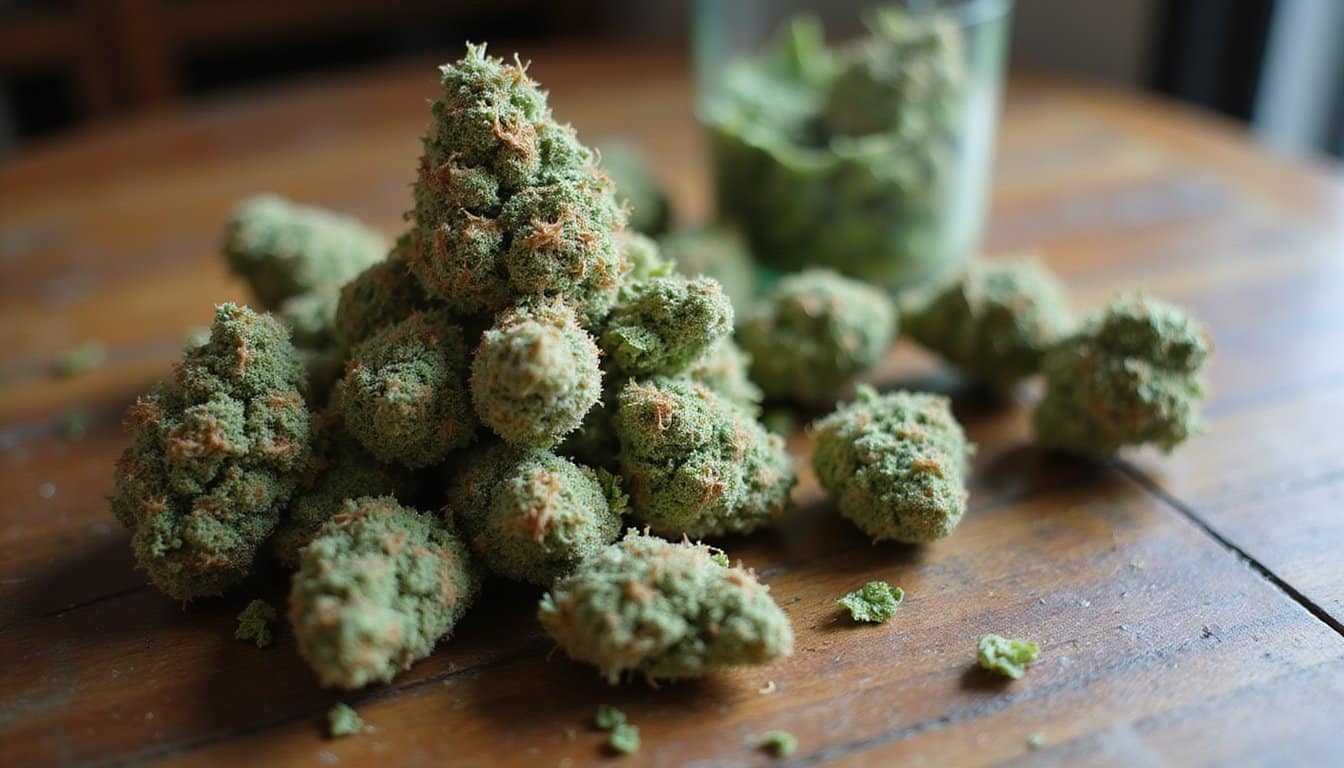
Your cannabis use frequency directly determines your psychosis risk through a clear dose-response relationship. Research shows no significant risk increase with monthly or yearly use, but weekly consumption elevates your risk by 35%, while daily use of high-potency products (≥10% THC) raises it nearly fivefold compared to non-users. This pattern holds independent of your genetic predisposition, meaning frequency alone can push you into a high-risk category regardless of family history. The stakes are even higher today since modern cannabis strains can exceed 17-28% THC, representing a dramatic increase from the 4% average potency seen in the 1990s.
Dose-Response Risk Patterns
Not all cannabis use carries equal psychiatric risk, frequency determines where you fall on the danger spectrum.
Research establishes a clear dose-response relationship between cannabis consumption and psychosis risk. If you use cannabis weekly, your psychosis risk increases by 35% compared to non-users. Escalate to daily cannabis use, and that figure jumps to 76%, nearly doubling your baseline vulnerability.
This gradient isn’t arbitrary. Non-linear modeling confirms risk escalation persists after adjusting for age, sex, and concurrent substance use. Particularly, yearly or monthly consumption shows no statistically significant elevation, identifying weekly use as the critical threshold where measurable harm emerges.
The clinical implication is direct: reducing frequency from daily to occasional use meaningfully lowers your psychiatric risk profile. Your consumption pattern functions as a modifiable risk factor you control. Studies show that patients with a history of cannabis use experience their first psychosis episode approximately three years younger than non-users, underscoring the long-term developmental consequences of sustained exposure. However, research indicates that even occasional use can still present severe clinical consequences for individuals already diagnosed with psychotic disorders.
High-Potency Daily Dangers
Though occasional cannabis use carries measurable psychiatric risk, daily consumption of high-potency products pushes that danger into a different category entirely. Research demonstrates that daily cannabis use elevates psychosis risk by 76% compared to non-use, while high-potency cannabis consumed daily multiplies that risk fivefold. The link between cannabis and psychosis risk is stronger for high-potency forms, making product strength a critical factor in outcomes.
The neurobiological mechanisms underlying this pattern involve structural brain changes that persist beyond intoxication. You’re looking at decreased hippocampal volume, disrupted white matter connections in the corpus callosum, and HPA axis dysregulation. These alterations create lasting vulnerabilities. THC exposure is particularly dangerous because it disrupts the brain’s endocannabinoid system, which can trigger psychotic symptoms in vulnerable individuals.
Daily users of high-potency products experience their first psychotic episode an average of six years earlier than non-users. The dose-response relationship is clear: frequency determines outcome. If you’re using concentrates containing up to 80% THC daily, you’re operating in a high-risk diagnostic category.
Why High-Potency THC Carries Greater Danger
When you use high-potency cannabis containing 12-18% THC versus traditional preparations at 3.4%, you’re exposing your brain to a dose-dependent escalation in psychotic symptom severity, daily users of potent strains face five times the risk of developing a psychotic disorder compared to non-users. If you’re under 25, this danger intensifies because your developing prefrontal cortex remains particularly vulnerable, with research showing first psychosis episodes occur an average of six years earlier in daily high-potency users. The clinical trajectory is stark: cannabis-induced psychosis carries the highest conversion rate to schizophrenia spectrum disorder of any substance, making potency a critical variable in your long-term mental health outcomes. Research found that 78% of patients with first-episode psychosis had used high-potency cannabis compared to only 37% of healthy controls, highlighting the strong association between potent strains and psychotic disorders. Cases were also significantly more likely to be current daily users and have used cannabis for more than five years compared to controls.
Dose-Dependent Risk Increases
Because psychosis risk scales directly with THC exposure, understanding dose thresholds is critical for clinical assessment. The dose-response relationship between cannabis and psychosis follows a predictable pattern: weekly use raises your risk by 35%, while daily cannabis use risk escalates to 76%. When you combine frequency with high-potency cannabis, these figures multiply dramatically.
| Usage Pattern | Psychosis Risk Increase |
|---|---|
| Weekly use | 35% (RR=1.35) |
| Daily/near-daily | 76% (RR=1.76) |
| Daily high-potency | 5x baseline risk |
Cannabis use disorder development correlates strongly with escalating consumption patterns. If you’re using daily, particularly products exceeding 15% THC, you’re operating within the highest-risk category. Experimental studies confirm THC induces psychotic symptoms in a dose-dependent manner, higher concentrations consistently produce more severe psychiatric outcomes. Notably, hash with lower THC potency showed reduced psychosis risk compared to high-potency THC products, further demonstrating the critical role concentration plays in psychiatric vulnerability. This concern has intensified as modern vaping devices can now deliver THC concentrations as high as 70-90%, representing a dramatic increase from the 2-4% typical of cannabis in the 1960s-1980s.
Youth Vulnerability Amplified
The dose-response data gains sharper clinical significance once you factor in age at exposure. Your adolescent brain development continues into your mid-20s, making this period uniquely susceptible to THC’s neurotoxic effects. Research shows teens using cannabis face an 11-fold higher risk of psychotic disorder diagnosis compared to non-users. Notably, this very strong association was not found in young adulthood, suggesting adolescence represents a distinct window of vulnerability.
High THC strains effects prove particularly damaging during this window. Studies reveal decreased hippocampal volume and disturbed white matter connectivity in youth using potent products. If you carry genetic vulnerability or have a family history of psychosis, these risks compound dramatically. The UK cannabis market has become increasingly dangerous as higher-potency cannabis like “skunk” now dominates what’s available to young users.
The numbers are stark: 10.1% of youth using high-potency cannabis developed new psychotic experiences versus 3.8% using lower-potency forms. Earlier onset predicts earlier symptom emergence, establishing adolescence as the peak vulnerability period for cannabis-induced psychotic disorders.
Psychosis Progression Rates
Your progression from cannabis-associated psychosis syndrome (CAPS) to hospital admission follows predictable patterns. A prior psychosis diagnosis increases your CAPS risk fourteen-fold, while 76% of CAPS hospital admissions occur in individuals with existing psychosis histories. Substance-induced psychotic disorder develops more readily when you’re using concentrated products, 54% of admissions involve prolonged CAPS requiring over one week for recovery. These progression rates demonstrate that potency directly determines your clinical trajectory. understanding how to get out of weed psychosis is crucial for those affected, as timely intervention can significantly improve outcomes. Engaging in therapies such as cognitive behavioral therapy and exploring medication options may provide relief. Additionally, maintaining a strong support system can help individuals navigate their recovery journey more effectively.
Young Cannabis Users Face the Highest Psychosis Risk
While cannabis-related psychosis can affect users across age groups, adolescents face the steepest risk, data show they’re 11 times more likely to develop a psychotic disorder compared to non-users, with an adjusted hazard ratio reaching 11.2 (95% CI, 4.6-27.3). Trying cannabis before age 18 increases your schizophrenia diagnosis likelihood by 2.4 times.
Key clinical findings for adolescence include:
- A clear dose-response relationship exists between cannabis frequency and psychotic symptoms
- 77.8% of adolescent psychosis hospitalizations involve past-year cannabis use
- The risk multiplies with earlier initiation age
- This vulnerability doesn’t persist into young adulthood (aHR 1.8; 95% CI, 0.6-5.4)
Your developing prefrontal cortex remains particularly susceptible during adolescence. Population-based data from over 11,000 Ontario youth confirm this age-dependent vulnerability pattern.
When Cannabis-Induced Psychosis Becomes Schizophrenia

If you’ve experienced cannabis-induced psychosis, you’re facing a 34-36% chance of progressing to a schizophrenia diagnosis, the highest shift rate among all substance-induced psychoses. This progression isn’t random; it’s driven by THC’s disruption of dopamine pathways in your brain’s mesolimbic system, where repeated overstimulation can trigger lasting changes in how you process reality. Understanding whether you fall into a high-risk category, particularly if you’re a young male with repeated psychotic episodes, can help you and your healthcare provider take preventive action before temporary symptoms become a chronic condition. Many individuals wonder what does weed psychosis feel like, often describing it as a disorienting experience marked by intense anxiety, paranoia, and hallucinations. These symptoms can vary greatly in severity and duration, leading to confusion about what is real and what isn’t. The emotional turmoil can be distressing, making it crucial to seek help if you find yourself in this situation.
Progression Rates and Statistics
Because cannabis-induced psychosis doesn’t always resolve permanently, clinicians track conversion rates, the percentage of patients who later develop a chronic psychotic disorder such as schizophrenia. Research reveals nearly 50% of individuals hospitalized for cannabis-induced psychosis receive a schizophrenia diagnosis within follow-up periods.
The dose-response relationship profoundly influences your risk:
- Weekly use increases psychosis risk by 35%; daily use elevates it by 76%
- Heavy users (>50 occasions) face odds ratios of 3.1 for schizophrenia development
- Regular high-potency cannabis use quadruples schizophrenia risk
- Baseline cannabis use predicts psychosis more strongly than recent use
Key risk factors include family history of substance use disorders, which increases conversion likelihood fivefold. Vulnerable populations, particularly adolescents, young adults, and males, show worse progression trajectories with more hospitalizations and readmissions following cannabis-induced psychotic episodes.
Dopamine Pathway Mechanisms
Understanding how cannabis-induced psychosis converts to schizophrenia requires examining the dopamine pathway mechanisms that both conditions share. Research shows THC triggers dopamine release in your striatum and cortex, the same pattern observed in schizophrenia. When you have cannabis use disorder, neuroimaging reveals elevated dopamine-related activity in brain regions linked to psychotic symptoms, with changes persisting at one-year follow-up.
Your neurotransmitters undergo measurable disruption during chronic use. THC creates a dopamine imbalance in the nigrostriatal pathway, producing hallucinations and delusions identical to schizophrenic positive symptoms. The hippocampus, critical for memory and reality testing, becomes compromised through this same dopaminergic dysfunction.
Substance-induced psychosis and first-episode schizophrenia converge on identical neurobiological mechanisms. Both conditions activate what researchers term the “final common pathway”, striatal hyperdopaminergia responsible for clinical psychosis expression.
Identifying High-Risk Individuals
The dopamine pathway disruptions linking cannabis use to psychosis don’t affect all users equally, specific risk factors determine who’s most likely to progress from cannabis-induced psychosis to a schizophrenia diagnosis.
Research identifies four critical vulnerability markers:
- Family history: If you have relatives with schizophrenia, you’re 2.5 to 10 times more likely to develop psychotic disorders with cannabis use than non-users sharing that genetic predisposition.
- Early onset use: Initiating before age 16 accelerates psychosis onset by approximately three years compared to non-users.
- Frequency potency: A dose-response relationship exists, daily high-THC use dramatically elevates your conversion risk.
- Demographic factors: Young men aged 21-30 face the highest vulnerability, with up to 30% of schizophrenia cases in this group potentially preventable by avoiding cannabis use disorder.
Who’s Most Vulnerable to Cannabis Psychosis?
Not everyone faces equal risk when it comes to cannabis-induced psychosis, certain populations carry noticeably higher vulnerability based on age, genetics, and patterns of use. If you’re among early-onset users, high-frequency users, high-potency users, or genetically predisposed individuals, your risk profile differs considerably from casual adult consumers.
| Risk Group | Key Finding | Risk Increase |
|---|---|---|
| Adolescent Users (12-19) | Brain development disruption | 11x higher psychosis risk |
| Daily High-Potency Users | THC concentration above 10% | 5x higher psychosis risk |
| Genetically Predisposed | Family history of schizophrenia | Highest vulnerability category |
You should recognize that these risk factors compound. If you initiated use before age 18, consume daily, prefer high-THC products, or have familial psychiatric history, you face multiplicative, not simply additive, risk elevation.
What Decades of Research Reveal About Long-Term Risk
Over six decades of longitudinal research have mapped cannabis’s trajectory from first use to psychotic disorder, and the findings consistently point toward dose-dependent, age-sensitive risk patterns that compound over time. Studies tracking over 900 first-episode psychosis cases across multiple sites confirm that daily high-potency use increases your risk nearly fivefold. As researchers delve deeper into the understanding of cannabis effects, they highlight the importance of examining the weed side effects on brain development, particularly in adolescents. Emerging evidence suggests that regular consumption may lead to alterations in brain structure and function, raising concerns about long-term cognitive impairments. These findings emphasize the necessity for informed discussions around cannabis use and its potential implications on mental health.
Key findings from longitudinal data include:
- Dose-dependent risks: Daily cannabis use quadruples psychotic illness risk compared to non-users
- Long-term brain changes: Elevated neuromelanin-MRI signals in dopamine-rich brain regions persist at one-year follow-up
- Age-dependent associations: An inflection point at age 20 separates heightened adolescent vulnerability from later periods
- High-potency and progression risks: Nearly 50% of cannabis-induced psychosis cases in Finnish research progressed to schizophrenia
These patterns demonstrate that cannabis acts on pathways directly linked to psychotic symptom development.
Warning Signs You Shouldn’t Ignore
Recognizing early warning signs can mean the difference between a brief psychotic episode and a trajectory toward chronic illness.
Pre-psychosis signs often emerge subtly. You might notice persistent low mood, escalating anxiety, social withdrawal, or unfounded suspicions about others. Difficulty concentrating, disorganized thoughts, and garbled speech indicate cognitive disruption requiring attention.
Hallucinations and delusions represent more advanced symptoms. You’re experiencing auditory or visual phenomena others don’t perceive, or you’re holding fixed false beliefs despite contradictory evidence.
Emotional behavioral changes include inappropriate or absent emotional responses, erratic movements, or catatonic posturing.
Functional declines manifest as deteriorating work or school performance, neglected hygiene, and impaired daily decision-making.
If you’re observing these patterns following cannabis use, seek prompt clinical evaluation. Early intervention substantially improves outcomes and may prevent progression to chronic psychotic disorders.
Could Reducing Cannabis Use Prevent Schizophrenia Cases?
Population-level data increasingly support a causal link between cannabis use disorder and schizophrenia, with prevention implications that vary sharply by sex and age. A Danish study analyzing 6.9 million health records found that up to 30% of schizophrenia cases in young males aged 21-30 could be preventable by averting cannabis use disorder.
Cannabis use disorder may account for up to 30% of schizophrenia cases in young males, making it a critical prevention target.
Key findings from public health research include:
- 15% of schizophrenia cases in males aged 16-49 were attributable to cannabis use disorder in 2021
- Young males show the strongest cannabis and schizophrenia risk association
- Nearly 50% of individuals with cannabis-induced psychosis later develop schizophrenia
- Population-attributable fractions increased post-legalization in Canada
The National Institute on Drug Abuse recognizes cannabis use disorder, defined by DSM 5 criteria, as a modifiable risk factor requiring targeted screening and early intervention strategies.
Ready to Break Free From Cannabis Dependency?
If cannabis use has started to feel less like a choice and more like a necessity, that shift is worth paying attention to. Florida Addiction Resource connects you with trusted, licensed cannabis detox and addiction treatment programs across Florida, free of charge and available 24/7. You don’t have to navigate this alone. Call +1 (561) 562-4336 today and let us help you find the right support.
Frequently Asked Questions
How Long Does Cannabis-Induced Psychosis Typically Last After Stopping Use?
Cannabis-induced psychosis typically resolves within a few days to two weeks after you stop using. Mild symptoms like anxiety clear within hours, while hallucinations and delusions usually fade within 48 hours to one week as THC metabolizes from your system. If you’re a heavy user, recovery may take longer, sometimes weeks, as your CB1 receptors normalize. Symptoms persisting beyond two weeks warrant clinical evaluation for underlying psychotic disorders.
Can CBD Products Cause Psychosis or Only THC-Containing Cannabis?
THC drives psychosis risk, not CBD. Research shows CBD alone doesn’t cause psychotic symptoms and may actually have antipsychotic properties. However, you shouldn’t assume CBD products are completely safe, many contain undisclosed THC, and quality control varies widely. If you’re using CBD for anxiety or other concerns, verify that third-party lab testing confirms minimal THC content. You’ll want to consult your healthcare provider, especially if you have psychosis risk factors.
Are Edibles More Likely to Cause Psychosis Than Smoking Cannabis?
Yes, edibles may carry a higher psychosis risk than smoking cannabis. When you consume edibles, your liver converts THC into 11-hydroxy-THC, a metabolite that crosses the blood-brain barrier more efficiently and produces stronger psychoactive effects. You’re also more likely to overconsume due to delayed onset, leading to prolonged, intense exposure. ER data show edible-related visits often involve more severe, extended psychiatric symptoms compared to inhaled cannabis.
Does Cannabis Psychosis Show up on Brain Scans or Medical Tests?
Yes, cannabis psychosis can show up on specialized brain scans. Research using structural MRI reveals grey matter reductions in CB1 receptor-rich areas like the prefrontal cortex and cingulate. Neuromelanin-sensitive MRI detects elevated signals in dopamine-producing regions, particularly the substantia nigra, that correlate with psychosis risk. However, these imaging findings aren’t used for routine diagnosis, clinicians typically diagnose cannabis-induced psychosis through clinical evaluation, symptom assessment, and toxicology screening rather than brain imaging.
What Medications Do Doctors Use to Treat Cannabis-Induced Psychosis Symptoms?
Doctors typically prescribe second-generation antipsychotics to treat your cannabis-induced psychosis symptoms. You’ll most commonly receive aripiprazole, olanzapine, clozapine, or lurasidone. Long-acting injectable forms of aripiprazole and olanzapine cut hospitalization risk by 50, 75% compared to oral versions. Lurasidone at 74, 128 mg daily shows particular effectiveness for first episodes, improving positive symptoms within 2, 4 weeks. Your doctor may also use short-term sedatives for acute agitation during initial stabilization.