






Yes, smoking weed can cause temporary eye bags. When THC binds to CB1 receptors in your ocular tissues, it triggers vasodilation that increases blood flow and capillary permeability around your eyes. This causes fluid to accumulate in the thin, capillary-dense periorbital skin beneath your eyes. The effect is dose-dependent, more THC means more pronounced puffiness. Understanding the specific mechanisms behind THC’s vascular effects can help you minimize these visible changes. Additionally, stopping smoking weed can stop smoking weed cause night sweats, which may occur as the body adjusts to the absence of THC. This is a temporary side effect as the endocannabinoid system recalibrates itself, allowing for potential improvements in sleep quality over time. Understanding these withdrawal symptoms can provide reassurance during the cessation process, as they often diminish with patience and support.
Can Smoking Weed Actually Cause Eye Bags?
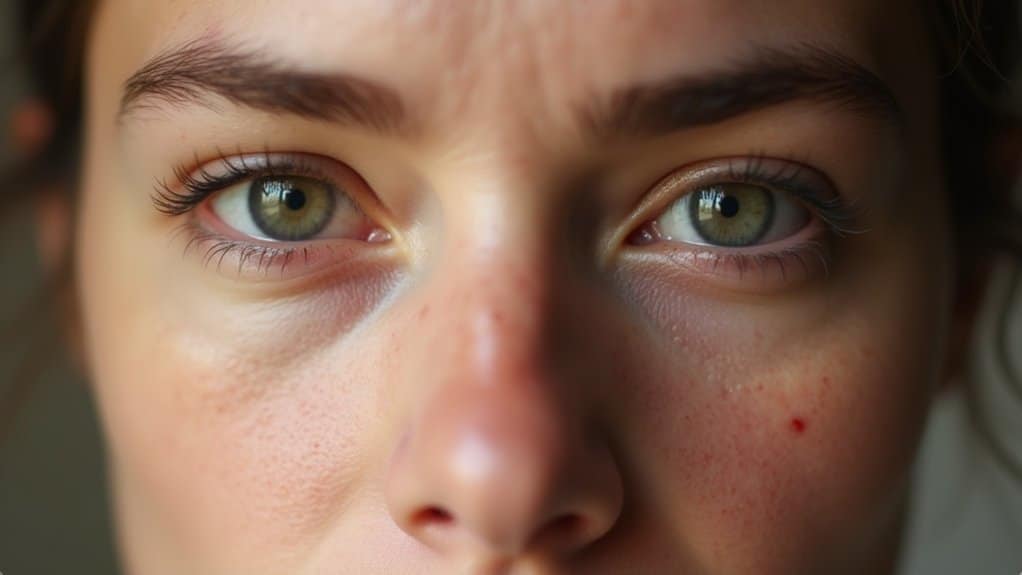
How exactly does cannabis affect the delicate tissue surrounding your eyes? When you smoke marijuana, THC binds to CB1 receptors throughout your endocannabinoid system, triggering vasodilation that increases blood flow to the periorbital skin. This thin dermis and epidermis, lacking substantial subcutaneous fat, reveals vascular changes more readily than other facial areas. Marijuana temporarily lowers blood pressure, causing blood vessels to dilate and potentially contributing to fluid accumulation in the under-eye area.
Research confirms cannabis causes conjunctival injection and eye redness, but direct studies on under-eye bags remain limited. A comprehensive literature review found only 20 studies examining the eyelid effects of cannabis usage, highlighting significant gaps in our understanding. However, indirect mechanisms suggest plausible connections: THC disrupts REM sleep, promotes dehydration, and alters lymphatic drainage. Inhaling smoke introduces carbon monoxide and particulates that trigger histamine release and inflammation, increasing vascular permeability. The physiological impacts of cannabis usage extend beyond ocular effects, influencing various bodily systems. For instance, the modulation of neurotransmitters can affect mood and cognitive function, potentially leading to increases in anxiety or altered perception. Additionally, long-term usage may result in persistent changes to cardiovascular health, necessitating further investigation into the comprehensive effects of cannabis on overall well-being.
Anecdotal reports from regular users describe developing periorbital edema and dark circles that improve after abstinence. Individual responses vary based on genetics, sleep quality, and concurrent factors like allergic rhinitis.
Why Weed Makes Your Eyes Look Puffy and Swollen
Several physiological mechanisms explain why cannabis makes your eyes appear puffy and swollen, starting with direct tissue irritation. Smoke or vapor irritates delicate periorbital tissues, triggering protective tearing and histamine release. Harmful chemicals in marijuana smoke, including hydrocarbons, impede collagen integrity, worsening under-eye bags over time.
THC’s vasodilatory effects compound this issue. When you consume cannabis, THC relaxes blood vessel walls, boosting facial blood flow and increasing capillary permeability around your eyes. This enhanced circulation causes visible swelling in the thin periorbital skin. The more THC consumed, the more pronounced the redness and puffiness become. THC crosses the blood-brain barrier and acts as a vasorelaxant, which also decreases intraocular pressure and affects visual processing.
Cannabis also disrupts your tear film balance. While inducing dry eyes through TRPA1 receptor activation, your eyes overcompensate by producing excess tears, yet this reflex tearing provides ineffective lubrication. Strains with higher CBD content may lessen these vascular effects, while chronic exposure risks persistent dry eye and surface damage. can quitting smoking weed cause constipation is an important question for regular users considering the change. The endocannabinoid system plays a role in regulating digestive processes, which can lead to changes in bowel habits when cannabis use is halted. As the body adjusts to the absence of cannabinoids, individuals may experience various gastrointestinal effects, including constipation.
How THC Triggers Red Eyes Through Vasodilation
When THC enters your bloodstream, it binds to CB1 cannabinoid receptors concentrated throughout ocular tissues, including the retina and blood vessel walls, triggering a cascade that relaxes smooth muscle in arterial walls. This vasodilation causes capillaries in your sclera to expand, making normally invisible blood vessels prominent and producing the characteristic red appearance. Many people mistakenly attribute this effect to smoke irritation, but THC’s interaction with cannabinoid receptors is the primary driver behind cannabis-induced red eyes.
Your heart rate can increase up to 60% above resting levels to compensate for the resulting drop in blood pressure. Studies using synthetic THC (dronabinol at 7.5mg orally) demonstrate measurable decreases in retinal arteriovenous passage time, confirming dose-dependent vascular effects. The eyes are particularly susceptible to this effect due to the high density of capillaries in ocular tissue, where even minor vascular changes become immediately visible.
This response occurs regardless of consumption method, smoking, vaping, or edibles all produce ocular redness. Individual sensitivity varies considerably; some people experience pronounced redness at 5mg THC, while others show minimal effects at 20mg.
Do CBD Strains Cause Less Eye Redness Than THC?
Why does THC turn your eyes red while CBD typically doesn’t? The answer lies in their distinct interactions with your endocannabinoid system. THC activates CB1 receptors, triggering vasodilation in ocular blood vessels and lowering intraocular pressure. CBD lacks these vasodilatory properties entirely, research shows it doesn’t noticeably affect intraocular pressure or dilate eye blood vessels. Interestingly, some studies suggest CBD may actually interfere with THC’s ability to lower intraocular pressure. Since CBD does not bind directly to CB1 receptors like THC does, it cannot produce the same blood pressure changes that lead to red eyes.
When you choose CBD-rich strains with minimal THC content, you’re avoiding the primary mechanism behind cannabis-induced eye redness. However, product quality matters critically. Poorly manufactured CBD products may contain THC levels exceeding the legal 0.3% threshold, potentially triggering the red-eye response you’re trying to avoid.
Your consumption method also influences outcomes. Vaping or smoking CBD flower can irritate eyes through vapor or combustion byproducts, not the cannabinoid itself. Non-inhaled methods present fewer ocular irritation risks.
Dry Eyes From Weed and the Toll on Skin Around Your Eyes
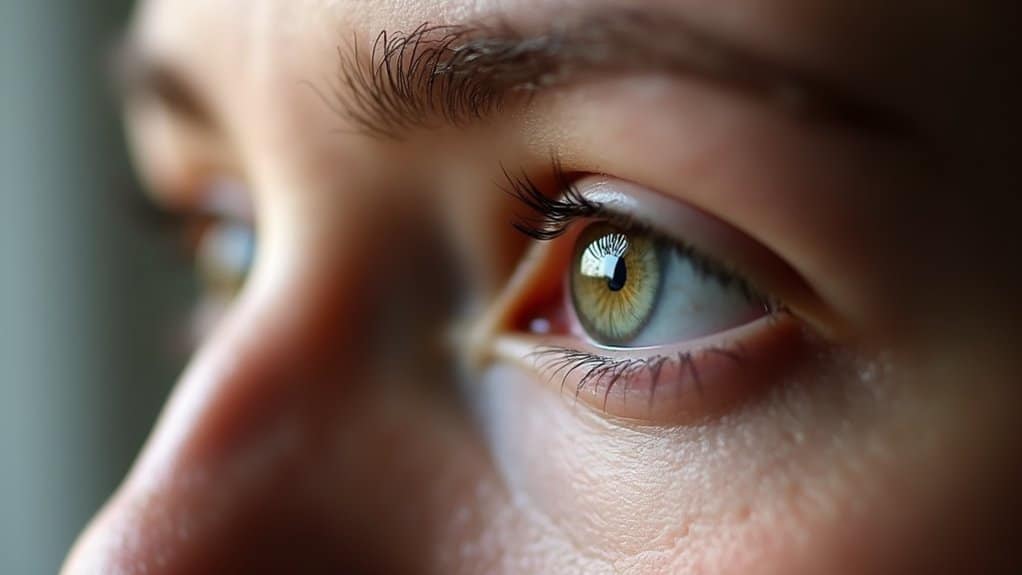
Beyond redness, THC’s effects on your eyes extend to tear production itself, a factor that directly impacts the delicate skin surrounding your eyes. When THC binds to CB1 receptors in your lacrimal gland nerve fibers, it inhibits aqueous tear secretion. Research confirms this mechanism: a study in male mice showed THC considerably decreases tearing, with CB1 receptor density four- to fivefold higher in males than females. Interestingly, THC appears to interact with unknown receptors in females, suggesting sex-based differences in how cannabis affects tear production. Notably, CB1 activation reduces basal tearing but does not affect tearing induced by parasympathetic activation like pilocarpine stimulation.
This aqueous deficiency dry eye (ADDE) creates a cascade affecting periorbital skin. Your reduced blink rate increases mechanical stress on thin under-eye tissue. Chronic dryness promotes inflammation near your eyelids, while prolonged irritation and friction stress the surrounding skin. Smoke exposure compounds the problem by reducing your tear lipid layer and increasing tear osmolarity. Over time, persistent dehydration may exacerbate fine lines and thinning in this vulnerable area.
What Studies Say About Weed and Under-Eye Skin Aging
Although anecdotal reports often link cannabis use to faster facial aging, the clinical evidence presents a more nuanced picture that separates smoking’s effects from cannabinoids themselves. A University of Western Australia study found cannabis users appeared up to 11% older, while research in Drug and Alcohol Dependence linked marijuana smoke hydrocarbons to premature aging over 17 years. The culprit? Combustion damages collagen and elastin through oxidative stress and vasoconstriction, limiting oxygen delivery to your periorbital skin. Importantly, neither study conclusively established that marijuana use had a direct causal role in aging. One NIH study suggests cannabis use may cause shortened telomeres, a marker of accelerated biological aging that could contribute to premature skin cell deterioration.
However, cannabinoids themselves show potential benefits. PMC research demonstrated that THC and CBD (0.5-2.0 µM) increased fibroblast growth and decreased senescence markers. CBD specifically prevented UV-induced structural damage in dermal fibroblasts. The contradiction clarifies an important distinction: smoking harms your under-eye skin, but cannabinoids don’t inherently accelerate aging when you eliminate combustion from the equation.
Sleep, Hydration, and Habits That Matter More Than Weed
The combustion-versus-cannabinoid distinction matters, but your daily habits likely influence under-eye appearance far more than occasional cannabis use. Sleep deprivation disrupts blood vessel constriction, causing dilation and fluid pooling that creates visible puffiness and dark circles. Even one night of poor sleep triggers increased transepidermal water loss and impaired skin barrier function. Lack of sleep also disrupts the natural repair and renewal processes of the skin, compounding these visible effects over time.
| Habit | Under-Eye Impact |
|---|---|
| Sleep deprivation | Vessel dilation, fluid pooling, darker circles |
| Dehydration | Reduced skin translucency, impaired barrier |
| Prolonged screen time | Decreased blink rate, capillary damage from rubbing |
| Chronic stress | Elevated inflammatory cytokines, compromised skin integrity |
Dehydration diminishes periorbital skin translucency, while stress elevates IL-1β and TNF-α levels, directly impairing your skin’s structural integrity. You’ll achieve more noticeable improvements by prioritizing consistent sleep and adequate hydration than by focusing solely on cannabis cessation. If lifestyle changes don’t resolve persistent under-eye concerns, consulting a dermatologist can help identify whether genetics or other underlying factors are contributing to the problem.
Eye Care Tips for Cannabis Users
Because THC lowers systemic blood pressure and activates CB1 receptors in vascular smooth muscle, it dilates the conjunctival blood vessels that supply your eye’s surface, producing the characteristic redness that typically peaks within 30 minutes of inhalation and persists for one to three hours.
To manage these effects, apply preservative-free artificial tears immediately after use to combat reduced tear production. Cold compresses held against closed lids for 10 minutes constrict dilated vessels and reduce visible inflammation. Cooled chamomile tea bags offer anti-inflammatory benefits for persistent irritation. Marijuana also decreases your blink rate, which can lead to meibomian gland dysfunction and worsen dry eye symptoms over time.
Consider selecting strains with higher CBD-to-THC ratios, which minimize vasodilation severity. If redness or dryness extends beyond 24 hours, consult an eye care practitioner, this timeline suggests underlying conditions unrelated to cannabis. Avoid driving post-use, as THC impairs retinal response times and spatial perception.
Ready to Break Free From Cannabis Dependency?
If cannabis use has started to feel less like a choice and more like a necessity, that shift is worth paying attention to. Florida Addiction Resource connects you with trusted, licensed cannabis detox and addiction treatment programs across Florida, free of charge and available 24/7. You don’t have to navigate this alone. Call +1 (561) 562-4336 today and let us help you find the right support.
Frequently Asked Questions
How Long Do Thc-Related Eye Effects Last After You Stop Smoking?
Your red eyes typically clear within 24, 72 hours after you stop smoking, as THC-induced vasodilation reverses once cannabinoid levels drop. Dry eye symptoms often improve within the first week, though they may linger if you’ve developed Meibomian gland dysfunction. If you’re a heavy, long-term user, subtle visual disturbances like contrast sensitivity changes can persist for 3, 6 months as your retinal processing normalizes. Individual factors, usage frequency, metabolism, and baseline eye health, influence your specific timeline.
Can Edibles Cause the Same Eye Bags as Smoking Weed?
Yes, edibles can cause similar eye bags because THC triggers the same vascular and sleep-related effects regardless of how you consume it. You’ll still experience blood vessel dilation, potential dehydration, and REM sleep disruption that contribute to periorbital puffiness. However, you’ll avoid smoke-induced irritation and histamine release that worsen swelling. Since edibles produce longer-lasting, more potent 11-hydroxy-THC, your under-eye effects may actually persist longer than with smoking.
Does Cannabis Use Affect Contact Lens Wearers Differently Than Non-Wearers?
Yes, cannabis affects you differently if you wear contact lenses. THC reduces your tear production and slows your blink rate, creating dryness that makes lens wear uncomfortable. Your eyes’ blood vessel dilation increases irritation against lenses already stressing your cornea. You’ll also experience impaired accommodation, making focusing harder, especially with multifocal lenses. These combined effects heighten your risk of corneal scratches and infections compared to non-wearers experiencing the same cannabis-induced changes.
Are Eye Bags From Weed Worse for People With Allergies?
Yes, you’ll likely experience more pronounced eye bags if you have allergies. Cannabis smoke triggers histamine release in your periorbital tissues, compounding the inflammatory swelling allergies already produce. You’re dealing with a double hit: smoke irritants aggravate your ocular surface while THC’s vasodilatory effects increase capillary permeability around your eyes. This combination worsens fluid accumulation and venous pooling beneath your already sensitized, allergy-prone skin.
Can Marijuana Use Worsen Existing Glaucoma or Other Eye Conditions?
Yes, marijuana can worsen your glaucoma management despite temporarily lowering intraocular pressure. THC reduces IOP for only 3, 4 hours, requiring impractical dosing of 8, 10 daily uses for continuous control. You’ll also experience decreased blood pressure and tachycardia, which reduce blood flow to your optic nerve, potentially accelerating damage. Tolerance develops over time, diminishing ocular benefits. The American Academy of Ophthalmology doesn’t recommend cannabis because FDA-approved therapies provide superior, consistent IOP control with fewer systemic risks.